

Antibacterial properties are one of the important features in various industries that play a fundamental role in reducing microbial load and increasing product safety and hygiene. This article examines the concept of antibacterial properties, its importance in maintaining the health and longevity of products, the materials that create this property and their applications in various industries. Also, the role and importance of antibacterials in polymer pipes as part of water and fluid transmission systems are discussed and examined in this article.
1. Introduction
With the increasing public awareness of the importance of health and safety in consumer products, the demand for materials and products with antibacterial properties is increasing. This property, which provides the ability to prevent the growth and proliferation of bacteria, is widely used in the medical, hygiene, food packaging and plumbing industries. Adding this property to polymer pipes due to their widespread use in drinking water transportation will lead to increased water quality and safety. In this article, in addition to explaining the concept and importance of antibacterial properties, various materials and technologies for achieving this property are introduced and its role in polymer pipes is examined.
2. What is antibacterial property?
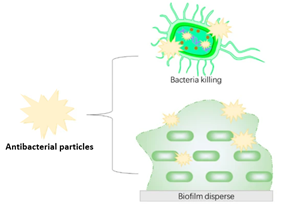
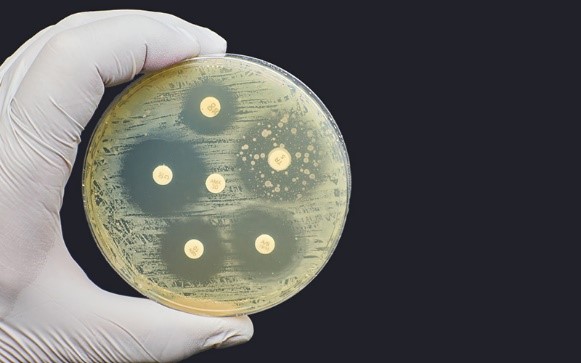
Antibacterial properties refer to the ability of a substance to inhibit the growth and multiplication of bacteria or to kill them. This property significantly reduces the risk of infection and disease transmission by reducing the microbial load on the surface of the material. Antibacterial substances can exert their effect by destroying the bacterial cell wall, interfering with the function of enzymes, or destroying internal structures such as DNA and RNA.
3. The importance of antibacterial properties
Maintaining public health and hygiene: These materials will play an effective role in maintaining public health and hygiene by preventing the spread of infectious diseases and reducing the risk of food contamination, as well as reducing the risk of contamination of medical equipment and sanitary supplies.
Extending the lifespan of products: These materials will play an important role in extending the lifespan of products by preventing the formation of biofilm, which can cause material degradation or reduce their performance.
Maintaining the quality of water and sensitive materials: These materials help maintain the quality of water and food by preventing the growth of bacteria in moist environments, such as water pipes or food storage containers.
4. Common uses of antibacterial substances
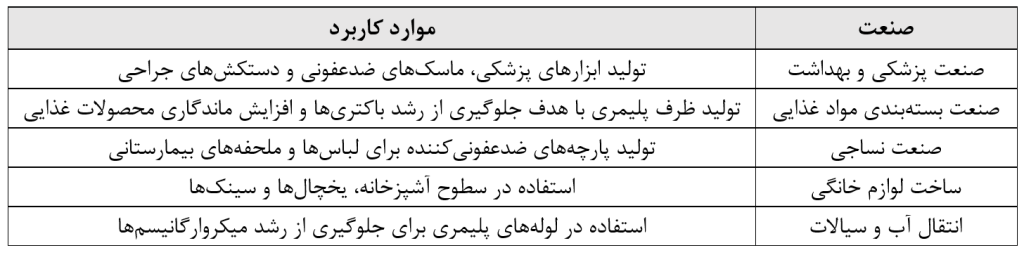
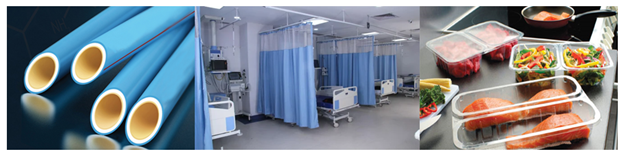
Antibacterial materials are used in various industries. The table below lists some of these industries and their common applications:
5. Substances with antibacterial properties
Various materials are used to create antibacterial properties in products, some of which are mentioned below:
Organic materials: This category of antibacterial materials includes synthetic chemicals that can effectively inhibit bacteria. These materials are usually added to various products in combination with polymers or other materials to add antibacterial properties. For example, quaternary ammonium compounds (QACs) are antibacterial materials that are widely used in detergents, disinfectants, and hygiene products. These compounds usually have a positive ammonium group that binds to the surface of bacterial cell walls and causes the destruction of their cell membranes. These materials are effective in killing a variety of bacteria and fungi and have the potential to be used in detergents and disinfectants to create clean surfaces in medical and hospital applications. These materials can also be used in the preparation of hygiene products such as antibacterial wet wipes. Polyhexamethylene biguanide (PHMB), a polymer compound, is also widely used in personal care products, disinfectants, and antibacterial dressings. It is also effective in protecting wounds against various types of bacteria.
Nanoparticles: Nanoparticles have excellent antibacterial properties due to their high surface area and greater reactivity compared to larger particles. Metal nanoparticles such as silver, copper, and zinc have wide applications in the production of antibacterial materials.
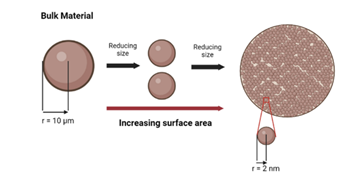
Silver nanoparticles: Silver nanoparticles exhibit high antibacterial properties due to their large contact surface area and ability to diffuse silver ions. This material can be used in the preparation of antibacterial coatings for the preparation of antibacterial polymer tubes and environmental and medical disinfectants.
Zinc nanoparticles: Zinc, especially zinc oxide (ZnO), exhibits good antibacterial properties. This material can have a significant effect in inhibiting the growth of bacteria. It is also non-toxic and environmentally friendly. This material is used in the preparation of water supply pipes and ventilation systems, as well as the production of antibacterial coatings in the medical field.
6. The importance of antibacterials in polymer pipes
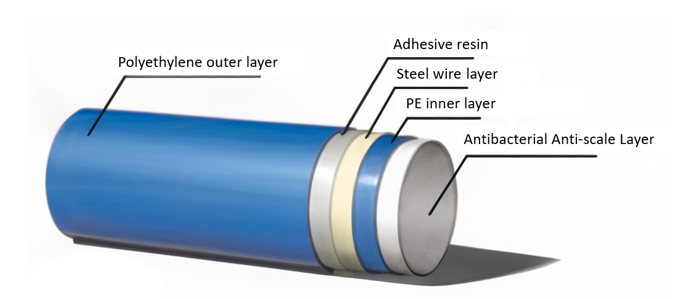
Polymer pipes have a special need to have antibacterial properties due to their widespread use in transporting drinking water:
1. Preventing biofilm growth: In water pipes, the accumulation of biofilm can reduce water quality and cause an unpleasant odor or change its taste.
2. Increased safety and hygiene: Preventing the spread of pathogenic bacteria such as E. Coli and Legionella in drinking water systems.
3. Reduce the need for disinfectants: Using antibacterial pipes can reduce the need for chemicals to clean the system.
4. Increase system lifespan: Using antibacterial pipes prevents blockage and damage caused by bacterial accumulation and biofilm formation.
5. Special applications: In hospitals and health centers where the transfer of sterile water is essential, antibacterial pipes are of particular importance.
7. Conclusion
Antibacterial properties, as an important feature in polymer products, play a significant role in maintaining health, safety and increasing the lifespan of products. Antibacterial polymer pipes play a key role, especially in drinking water transportation and sanitary applications, and ensure the quality and health of water by reducing the growth of microorganisms. Using appropriate materials and technologies to add this property to products can create significant added value in various industries.
Resources:
1. Gao, Y., & Cranston, R. (2008). Recent advances in antimicrobial treatments of textiles. Textile Research Journal, 78(1), 60-72.
2. Palza, H. (2015). Antimicrobial polymers with metal nanoparticles. International Journal of Molecular Sciences, 16(1), 2099-2116.
3.Zodrow, K., Brunet, L., Mahendra, S., Li, D., Zhang, A., Li, Q., & Alvarez, P. J. J. (2009). Polysulfone ultrafiltration membranes impregnated with silver nanoparticles show improved biofouling resistance and virus removal. Water Research, 43(3), 715-723.
4.Jones, S. A., & Bowler, P. G. (2004). Antimicrobial activity of silver-containing dressings is influenced by dressing conformability and pH. Wounds, 16(8), 308-314.
5.Perelshtein, I., Applerot, G., Perkas, N., Wehrschuetz-Sigl, E., Hasmann, A., Guebitz, G. M., & Gedanken, A. (2009). Antibacterial properties of an in situ generated and simultaneously deposited nanocrystalline ZnO on fabrics. Journal of Materials Chemistry, 19(9), 4597-4602
Content compiler: Zahra Davat-Gari
Scientific Editor: Dr. Mehrnaz Bahadori