
Abstract
Compounding of polymeric materials is a complex process that involves mixing base polymers with additives, fillers, and reinforcements to achieve desired mechanical, thermal, and chemical properties. Conventional methods of formulation development rely heavily on trial-and-error experiments, which are time-consuming and costly. The emergence of machine learning (ML) and artificial intelligence (AI) has revolutionized this field, enabling data-driven approaches to optimize formulations, predict material properties, and streamline manufacturing processes. This paper reviews the applications of machine learning and artificial intelligence in polymer compounding and explores their potential to accelerate innovation, improve efficiency, and reduce costs in the polymer industry.
1. Introduction
Polymeric materials are widely used in modern industries, from packaging and automotive to construction and healthcare. The compounding process, which involves mixing polymers with additives such as stabilizers, fillers and reinforcers, is crucial to achieving desired performance properties. However, the complexity of polymer chemistry, the large number of possible formulations and the nonlinear interactions between components make compounding polymeric materials a challenging task.
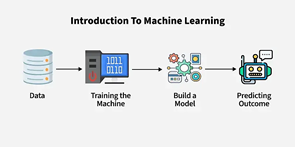
Machine learning and artificial intelligence offer powerful tools to address these challenges. Using big data sets, predictive modeling, and optimization algorithms, ML and AI can transform the way polymer materials are designed, developed, and manufactured. This article reviews key applications of machine learning and artificial intelligence in polymer compounding, including formulation optimization, property prediction, and process control.
2. Machine learning and artificial intelligence in formulation optimization
One of the most important applications of machine learning and artificial intelligence in polymer compounding is the optimization of material formulations. Traditional methods rely on repetitive experiments, which are often inefficient and costly. Machine learning algorithms, such as neural networks and genetic algorithms, can analyze given data and identify optimal combinations of polymers and additives to achieve specific performance goals.
– Data-driven formulation design:
Machine learning models can process large data sets containing information about polymer types, additive concentrations, and final material properties. By identifying patterns and correlations, these models can predict the impact of different formulations on mechanical properties such as tensile strength, thermal stability, and impact resistance.
– High-throughput screening:
AI-powered platforms can automate the screening of thousands of formulations, dramatically reducing the time required for testing. For example, robotic systems combined with machine learning algorithms can rapidly test and evaluate material samples and provide insights into the most promising formulations.
-Optimization with multiple objectives:
Polymer compounds often involve a trade-off between several performance criteria, such as strength, flexibility, and cost. Artificial intelligence algorithms, such as multi-objective genetic algorithms, can identify formulations that optimize these competing objectives simultaneously.
3. Predictive modeling of properties
Predicting the properties of compounded polymers is a critical step in materials development. Machine learning models can accurately predict material properties based on formulation data, reducing the need for extensive testing.
– Prediction of properties:
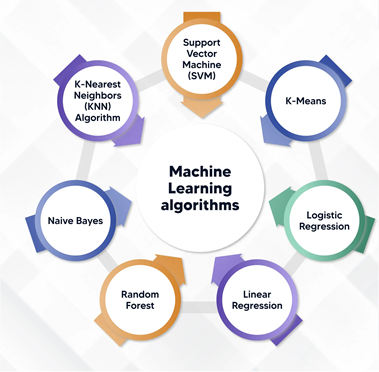
Supervised learning algorithms, such as support vector machines (SVMs) and random forests, can be trained using experimental data to predict properties such as melt flow index (MFI), tensile strength, and thermal conductivity. These predictions allow researchers to evaluate formulations virtually before conducting physical tests.
– Structure-property relationships:
Machine learning models can uncover complex relationships between molecular structures and material properties. For example, deep learning techniques can analyze the chemical structure of polymers and additives and predict their compatibility and synergistic effects.
– Accelerating material discovery:
AI-based platforms can accelerate the discovery of new materials by predicting the properties of untested formulations. This capability is particularly valuable for developing advanced materials with desired properties for specific applications.
4. Process optimization and control
In addition to formulation design, machine learning and artificial intelligence can also optimize the compounding process. Compounding polymers involves multiple steps such as mixing, extrusion, and cooling, each of which can affect the final properties of the material.
– Real-time process monitoring:
AI systems can monitor process parameters, such as temperature, pressure, and screw speed, in real time. By analyzing this data, machine learning models can detect anomalies, predict equipment failure, and recommend adjustments to maintain optimal conditions.
– Quality control:
Machine learning algorithms can analyze data from sensors and quality tests to identify defects, ensuring product quality consistently. For example, machine vision systems can inspect extruded tubes or films for surface defects, while predictive models can flag batches that are likely to fail quality tests.
– Improving energy and resource efficiency:
Artificial intelligence can optimize energy consumption and material use in the compounding process, reducing costs and environmental impacts. For example, reinforcement learning algorithms can identify process settings that minimize waste and energy consumption without compromising product quality.
5. Case Studies and Applications
Several real-world examples demonstrate the impact of machine learning and artificial intelligence in polymer compounding:
– Composites used in the automotive industry:
Artificial intelligence has been used to optimize the formulation of lightweight polymer composites in automotive applications, which improves strength-to-weight ratio and reduces fuel consumption.
– Packaging materials:
Machine learning models have enabled the development of biodegradable polymers with improved barrier properties that address sustainability challenges in the packaging industry.
– Additive manufacturing:
AI-based platforms have optimized polymer formulations for 3D printing, enabling the production of complex shapes with customized mechanical properties.
6. Challenges and future directions
Although machine learning and artificial intelligence offer significant benefits, their adoption in polymer compounding faces several challenges:
– Data access:
High-quality, labeled datasets are essential for training machine learning models. However, such data is often scarce or proprietary in the polymer industry.
– Model interpretation capability:
Many machine learning models, especially deep learning algorithms, act as “black boxes,” making it difficult to understand the relationships between inputs and outputs.
– Integration with existing systems:
Implementing AI solutions requires integration with existing manufacturing infrastructure, which can be complex and costly.
Future research should focus on developing more interpretable models, creating open datasets for the polymer community, and advancing AI-based automation in compounding processes.
7. Conclusion
Machine learning and artificial intelligence are revolutionizing the field of polymer compounding and have the potential to accelerate innovation, reduce costs, and improve sustainability in the polymer industry by enabling data-driven formulation design, accurate property prediction, and optimal process control. As AI continues to advance, its applications in polymer science and engineering will expand, paving the way for the development of advanced materials with unprecedented performance characteristics.
Resources:
- Smith, J. et al. (2020). “Machine Learning for Polymer Design: A Review.” Advanced Materials, 32(15), 2005673.
- Zhang, Y. et al. (2021). “AI-Driven Optimization of Polymer Composites for Automotive Applications.” Composites Science and Technology, 210, 108750.
- Lee, H. et al. (2019). “Deep Learning for Predicting Polymer Properties.” Macromolecules, 52(10), 3814-3824.
- Wang, L. et al. (2022). “Artificial Intelligence in Polymer Processing: Challenges and Opportunities.” Progress in Polymer Science, 125, 101487.
Content compiler: Maedeh Pirgharib Nawaz
Scientific Editor: Dr. Mehrnaz Bahadori