
Abstract
Superabsorbent polymers (SAPs) are advanced materials that have the ability to absorb and retain liquids up to several times their own weight. The water-absorbing and water-holding properties of these polymers have revolutionized various industries, including healthcare products, agriculture, environmental management, and biomedical applications. This article provides a comprehensive overview of superabsorbent polymers, including their definition, chemical structure, adsorption mechanism, various production methods, and their applications in various industries. It also reviews recent innovations in SAP technology that have been made to improve performance and sustainability.
Introduction
Superabsorbent Polymers (SAPs) are a class of advanced polymeric materials that have the ability to absorb and retain a very high volume of water or aqueous solutions relative to their dry weight. Due to their three-dimensional network structure and the presence of hydrophilic chemical groups, these polymers can absorb up to several hundred times their own weight in water without the absorbed liquid easily leaking or leaving the polymer structure. The unique characteristics of these polymers have led to their playing a very important role in various industries and their application has expanded widely in health products, agriculture, medicine, packaging industry and the environment.
Figure 1: Appearance difference of superabsorbent polymers before and after absorbing liquids
The history of the use of superabsorbent polymers dates back to the 1970s. Technological advances have improved the properties of these materials and increased the variety of their applications. In addition to reducing water consumption in the agricultural sector, these polymers play an effective role in maintaining personal hygiene, controlling humidity, absorbing liquids, and even removing environmental pollutants.
The nature of superabsorbent polymers
Superabsorbent polymers (SAPs), also known as hydrogels, are chemically known as polymers with three-dimensional networks, and this three-dimensional structure plays a key role in their properties and performance. These polymers are mainly made of monomers that have hydrophilic and polar groups; groups such as carboxylic acid (-COOH), sulfonic acid (-SO3H), hydroxyl (-OH) or amide (-CONH2) that have a high affinity for absorbing water molecules. The most common starting materials for making these polymers are polyacrylic acid (PAA) and acrylate salts, especially sodium polyacrylate. These polymers are usually linked together using crosslinking agents to form a stable network structure.

These crosslinks cause the polymer to swell but not dissolve when it absorbs water, so that the absorbed liquid remains within the polymer structure and does not leak out easily. The amount of crosslinks in superabsorbent polymers has a great influence on the water absorption capacity; increasing the crosslinks to the optimum level creates a coherent three-dimensional network and increases water absorption, but excessive amounts increase the density of the network and limits the space required for swelling, which in turn reduces water absorption. The type of coupling agent, particle size, and type of monomers also affect the performance of superabsorbents. Fine-tuning the percentage of crosslinks is essential to achieve a balance between the mechanical strength of the gel and the water absorption capacity.

Figure 3: Absorption of aqueous solution by a superabsorbent polymer
Superabsorbent polymers are divided into different types in terms of structure and chemical composition, each of which has its own characteristics and applications. The most common and widely used of them are polyacrylates, which are used in various industries, especially in the health industry, due to their high water absorption capacity. Another type of these polymers is polyacrylamides, which are used in areas such as agriculture and environmental protection due to their good flexibility and easy modification. In addition to synthetic polymers, in recent years, great efforts have been made to produce superabsorbent polymers based on natural materials such as starch, cellulose, chitosan, gelatin or alginate in order to reduce the environmental impacts of these materials. After chemical modification and crosslinking, these natural polymers can have a similar function to synthetic polymers in water absorption and can be used in environmentally friendly industries. In recent years, composite polymers incorporating nanoparticles or materials such as clay, graphene, and zeolite have been designed to increase strength, adsorption capacity, and improve stability. In addition, a new type of hydrophobic superabsorbent has been developed that, unlike conventional ones, has the ability to adsorb oil, petroleum, and other organic compounds. Smart superabsorbent polymers have also been introduced that are able to change their adsorption or release behavior under specific conditions such as changes in temperature, pH, or salt concentration.
Formation of superabsorbent polymers
One of the most common types of superabsorbent polymers is made by combining the monomer acrylic acid with sodium hydroxide and a crosslinking agent. This process results in the formation of the sodium salt of polyacrylate. Crosslinking agents such as tetraallyl ethoxyethane and TMPTA (trimethylolpropane triacrylate) are very important in this process because they create bonds between the polymer chains.

Figure 4: Formation of sodium polyacrylate using polyacrylic acid and sodium hydroxide
Three different methods are used to produce superabsorbent polymers:
1- Gel Polymerization
In this method, a solution of acrylic acid, sodium hydroxide, water, crosslinkers and UV photoinitiators is sprayed onto a moving bed or conveyor belt. This bed is passed through a chamber with intense UV radiation. The UV energy initiates the polymerization reaction and forms a three-dimensional network structure of sodium polyacrylate. As a result, the initial product is formed as a wet gel-like mass (gel cake) which, after being crushed, enters the drying process. The dried product is obtained in the form of SAP granules which are usually subjected to additional surface crosslinking to improve functional properties such as water absorption capacity, absorption rate and surface mechanical strength.
2- Suspension Polymerization
In this method, acrylic acid, sodium hydroxide, initiators, crosslinking agents and surfactants are introduced into the reactor in the presence of an organic solvent insoluble in the monomer. In this environment, monomer particles remain as suspended droplets in the organic phase and the polymerization reaction takes place within these droplets. The result of this process is the production of spherical sodium polyacrylate particles of a specific size, and the precise control of parameters such as temperature, stirring speed, type of surfactant and concentration of raw materials plays a decisive role in the dimensions and uniformity of these particles. After the reaction is complete, the SAP particles are separated from the reaction medium, washed and dried, and if necessary, surface crosslinking is performed on them to enhance their functional properties.
3- Solution Polymerization
In this technique, acrylic acid, along with the initiator, sodium hydroxide, and crosslinking agents, are dissolved in a suitable solvent medium, and the polymerization reaction proceeds uniformly throughout the reaction medium. Unlike suspension polymerization, in this method there are no suspended droplets and the polymer is formed in the continuous phase. After the reaction is complete, the superabsorbent polymer is obtained by removing the excess solvent. This technology is mostly used in the production of liquid SAPs or coating cellulose fibers with SAP. In this case, the polymer solution is sprayed or impregnated onto the fibers, and then the fibers containing the superabsorbent polymer are ready for use by a drying process.
Some properties of superabsorbent polymers
1. High absorption ability
These polymers are capable of absorbing up to several hundred times their own weight in water or aqueous solutions.
2.Keep liquids leak-free
Once absorbed, liquids are locked into the three-dimensional polymer network, preventing leakage.
3. Chemical resistance
Superabsorbent polymers have high resistance to chemicals and can maintain their performance in harsh environments.
4. Biocompatibility
Many of these polymers are made from biodegradable materials and do not harm the environment, which is very important for agricultural and medical applications.
5. Flexibility in design
Superabsorbent polymers can be produced in various forms such as powder, gel, or sheets and used in the design of various products.
6. Long shelf life
These polymers remain stable for a long time without losing their properties, which is of great importance for industrial applications.
7. Responsiveness to environmental conditions
Some smart types of these polymers can adjust their absorption or release behavior based on changes in temperature, pH, or salt concentration.
Application of super absorbent polymers in various industries
1. Sanitary industries
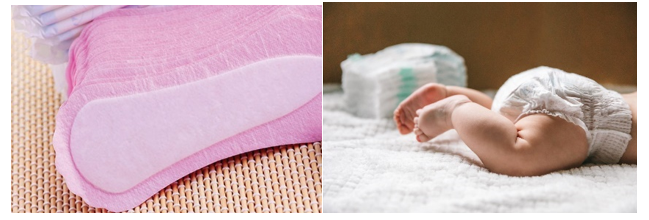
The largest and most important application of superabsorbent polymers is in the hygiene industry. These polymers are used in the production of baby diapers, feminine hygiene pads, hospital pads and similar products due to their ability to absorb and retain large volumes of liquids. The main property of these polymers in this application is the rapid absorption of liquid, trapping it within the structure and preventing moisture from returning to the surface of the product, which makes the consumer feel dry and comfortable.
2. Agriculture and horticulture
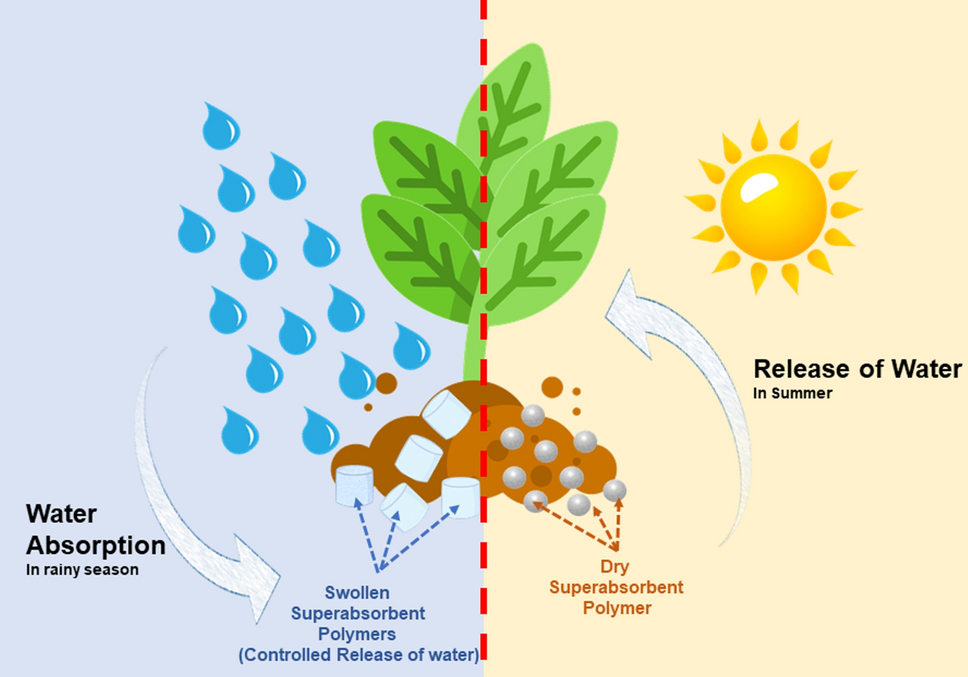
In agriculture, superabsorbent polymers are added to soil to increase its water holding capacity. These materials absorb water from irrigation or rainfall and gradually release it to plant roots during dry periods. This application reduces the frequency of irrigation, improves plant growth, increases irrigation efficiency, and saves water, especially in dry and water-scarce regions.
3. Medical applications
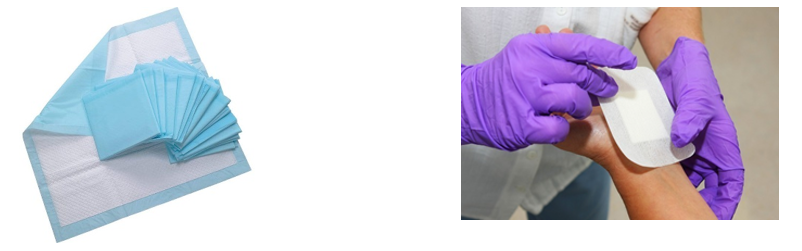
In the medical industry, superabsorbent polymers are used in the manufacture of wound dressings, advanced dressings, medical scaffolds, wound exudate absorbent pads, and moisture control systems. These polymers control wound moisture, prevent infection, and provide the right conditions for faster wound healing.
4. Application in packaging and transportation industries
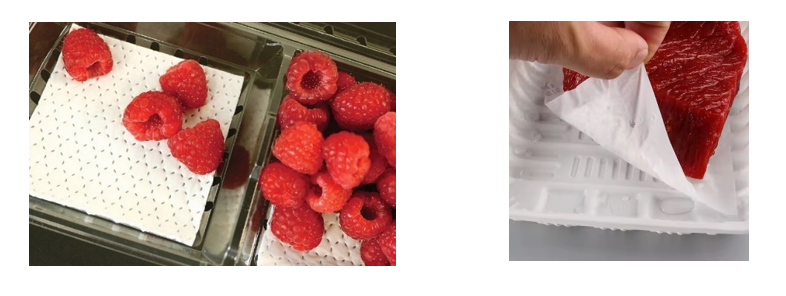
Superabsorbent pads can be used in food packaging or transportation of moist goods such as meat, fruit and vegetables to prevent spoilage or product quality changes by absorbing excess moisture. These polymers are also used in moisture-proof or humidity-controlled packages to protect water-sensitive goods.
5. Application in construction industries
Superabsorbent polymers are used in smart concretes or special construction mortars to control internal moisture levels. These polymers absorb excess water as the concrete dries and release it again when needed to prevent cracking or premature shrinkage. This increases the durability and strength of the structure.
6. Fuel and oil filtration and separation (dewatering)
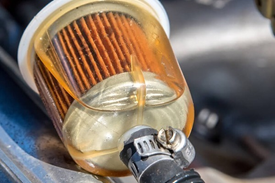
Superabsorbent polymers have a high affinity for aqueous liquids but are inert to oil-based liquids. This property makes these polymers very effective in absorbing water from various sources such as jet fuel, gasoline, and diesel when used in fuel filters. The selective adsorption properties of superabsorbent polymers contribute to their application in the management and separation of contaminated liquids in fuel filtration processes.
Conclusion
Superabsorbent polymers, as one of the most important and widely used groups of polymer materials, play a very valuable role in various industries. Due to their special structure and the presence of active chemical groups, these polymers have the ability to absorb and retain large amounts of water or liquids, and this feature has led to the expansion of their applications in areas such as health products, agriculture, medicine, pharmaceuticals, food industries, water purification and the environment. The diversity in the structure and composition of these polymers has enabled the production of various types of superabsorbents; from synthetic polymers with high absorption power to natural and biodegradable superabsorbents that are more compatible with the environment. Given the environmental challenges and the global trend towards sustainable development, the future of superabsorbent polymers, especially their natural and smart types, is predicted to be very bright and important and can provide new solutions for many industrial and environmental needs of humanity.
Resources:
Ostrand, M. S., DeSutter, T. M., Daigh, A. L. M., Limb, R. F., & Steele, D. D. (2020). Superabsorbent polymer characteristics, properties, and applications. In Soil Science Society of America Journal, 84(4), 1041-1054. Wiley
Zohuriaan-Mehr, M. J., & Kabiri, K. (2008). Superabsorbent Polymer Materials: A Review. Iranian Polymer Journal, 17(6), 451–477
Buchholz, F. L., & Graham, A. T. (1998). Modern Superabsorbent Polymer Technology. Wiley-VCH.
gelok.com/super-absorbent-polymer-overview
Content collector: Zahra Davatgari
Scientific Editor: Dr. Mehrnaz Bahadori