
Abstract
Thermosetting plastics are a class of polymers known for their unique properties and wide range of applications. This report provides an overview of thermosetting plastics, including their definition, properties, and applications.
Keywords: Thermosetting polymers, cross-linking process, applications of thermosetting polymers.
Introduction
Thermoset plastics, or more simply thermosets, are a class of polymers known for their unique properties and applications. Unlike thermoplastics, these materials undergo a chemical change during curing that irreversibly transforms them into a solid, rigid form. This transformation is brought about by heat or a catalyst, resulting in a three-dimensional, interconnected network structure.
Due to their excellent thermal stability and resistance to deformation, thermoset plastics are commonly used in high-temperature applications such as automotive parts, electrical insulation, and aerospace components. Their inherent strength, dimensional stability, and chemical resistance make them suitable for a variety of industries. However, once cured, these plastics cannot be remolded or reshaped, making them inherently different from their thermoplastic counterparts. Thermoset plastics play a vital role in modern manufacturing processes with their remarkable properties and wide range of applications.
Definition of thermosetting plastics
Thermosetting plastics are a class of polymers known for their unique properties and wide range of applications. This report provides an overview of thermosetting plastics, including their definition, properties, and applications.
Thermoset plastics are a class of polymers that undergo a chemical change during the curing process, resulting in a permanent and irreversible change in their molecular structure (Figure 1). Unlike thermoplastics, which soften and melt again when heated, thermoset plastics harden and retain their shape even at high temperatures. This unique property is attributed to the cross-linking process that occurs during their curing.
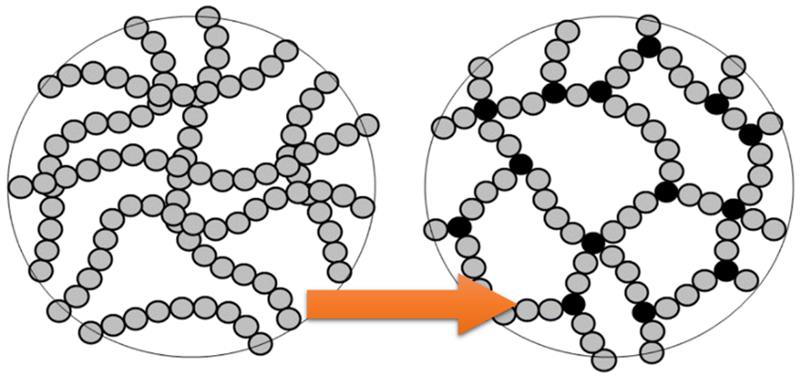
During the manufacturing process of thermoset plastics, the polymer is first placed in a liquid or semi-liquid state and allowed to mold into various shapes. Once the desired shape is achieved, the curing process begins, which involves exposing the material to heat, pressure, or the application of a curing agent. These agents lead to the formation of strong covalent bonds between the polymer chains, creating a three-dimensional network or “cross-linked” structure.
The crosslinking process, also known as crosslinking, in thermoset plastics is an irreversible process, meaning that the material cannot be remelted or reshaped after curing. This property gives thermoset plastics excellent dimensional stability and high resistance to heat, chemicals, and mechanical stress. They exhibit higher mechanical strength and toughness than thermoplastic polymers and are suitable for applications where product integrity is critical.
Construction of thermoset plastics
Thermoset products are generally made through liquid molding processes. Resins and other agents are introduced into tanks or barrels where they are heated, liquefied, and mixed; the liquid polymers and other agents are then injected into the mold cavity. During this time, the material undergoes a curing process in which the polymer chains are linked together, and the material then cools and hardens. This process is accompanied by strong, irreversible chemical bonds between the polymer chains, which prevents the risk of the final product melting, softening, or warping when exposed to high heat or corrosive environments. These characteristics make thermoset polymers very suitable for high-temperature applications and outdoor use. In general, two primary liquid molding processes are used to produce thermoset plastics.
1) Reaction Injection Molding (RIM)
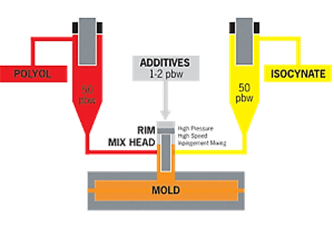
The RIM molding process begins when two liquid agents—an A component (such as a polyol) and a B component (such as an isocyanate)—are placed in separate tanks and heated to high temperatures. They are then mixed under high pressure. Once combined, the mixed liquid flows into a special mold, where a chemical reaction takes place, forming the desired polymer in the mold (Figure 2).
2) Resin Transfer Molding (RTM)♦
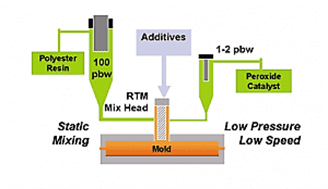
RTM is a closed-loop molding process, also known as liquid molding. In this process, the resin is mixed with a hardening agent or catalyst and injected into a mold containing dry fibers, such as fiberglass, where the polymer is allowed to cure and form (Figure 3).
Properties of thermosetting plastics
Thermosetting plastics have several distinctive properties that contribute to their widespread use in various industries. Some of the key properties of thermosetting plastics include:
- High thermal stability
Thermoset plastics exhibit excellent heat resistance and can withstand high temperatures without softening or deforming. This property makes them suitable for applications where exposure to high temperatures is important, such as automotive engine components and electrical insulation.
- Chemical resistance
Thermoset plastics exhibit high resistance to a wide range of chemicals, including acids, bases, solvents, and oils. They are less susceptible to degradation or corrosion when exposed to corrosive chemical environments, making them ideal for chemical processing equipment, storage tanks, and chemical-resistant coatings.
- Dimensional stability
Thermosetting plastics, once cured, retain their shape and dimensional stability even under changing environmental conditions. They have a low coefficient of thermal expansion, meaning they do not expand or contract significantly with temperature fluctuations. This property ensures accurate and consistent part dimensions over a wide range of temperatures.
- Mechanical strength
پلاستیکهای ترموست استحکام مکانیکی و سفتی بسیار خوبی را از خود نشان میدهند و یکپارچگی ساختاری را برای قطعات پلیمری فراهم میکنند. آنها دارای مقاومت کششی، فشاری و خمشی بالایی هستند که آنها را برای کاربردهای باربری مناسب میکند. مواد تقویتکننده، مانند فایبرگلاس یا الیاف کربن، می توانند خواص مکانیکی آنها را بهبود ببخشد.
- Electrical insulation
بسیاری از پلاستیکهای ترموست دارای خواص عایق الکتریکی عالی هستند که آنها را در کاربردهای الکتریکی و الکترونیکی ارزشمند میکند. دارای رسانایی الکتریکی کم، قدرت دیالکتریک بالا و در برابر قوس الکتریکی مقاوم هستند. این ویژگیها آنها را برای محفظههای الکتریکی، برد مدارها و پوششهای عایق مناسب میکند.
- Flame resistance Thermosetting plastics often exhibit good flame resistance due to their inherent chemical structure and crosslinking. They have a high ignition temperature and low flammability, making them suitable for applications where fire-resistant materials are required, such as electrical connectors, switches, and fire safety equipment.
- Impact resistance
Some thermoset plastics have good impact resistance, allowing them to withstand impacts and even sudden shocks without breaking. This property is important in applications where durability and resistance to mechanical impact are critical, such as automotive bumpers and sports equipment.
It is important to note that the specific properties of thermosetting plastics can vary depending on the type of resin and the specific formulation used. Different types of thermosetting plastics, such as phenolic resins, epoxy resins, melamine formaldehyde resins, and unsaturated polyester resins, may exhibit variations in properties that allow for use in a wide range of applications in different industries.
Applications of thermosetting plastics
Thermosetting plastics find wide applications in various industries due to their exceptional properties. Some of the main applications of thermosetting plastics include:
• Automotive industry
Thermoset plastics are used in the automotive industry for various components such as engine parts, electrical connectors, braking systems, interior trim, and exterior body panels. Properties such as high thermal resistance, dimensional stability, and mechanical strength make them ideal for withstanding the harsh conditions found in automotive environments.
• Electrical and electronics industry
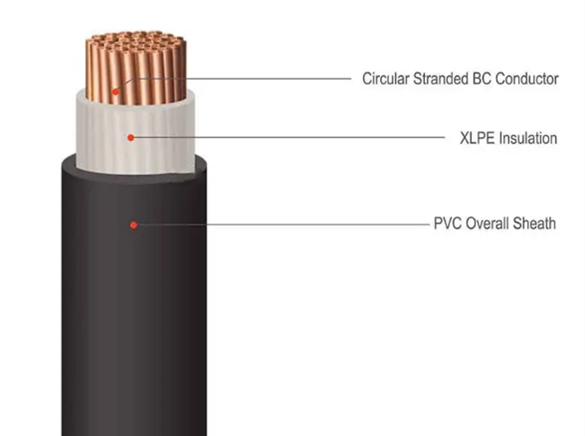
Thermoset plastics are widely used in electrical and electronic applications due to their excellent electrical insulating properties. They are used in the production of circuit boards, electrical enclosures, insulating coatings, connectors, and switches. Their resistance to heat and chemicals ensures the safe and reliable operation of electrical equipment (Figure 4).
• Aerospace industry
The aerospace industry relies on thermoset plastics for lightweight yet strong parts. These plastics are used in aircraft interiors, structural elements, radomes, and electrical insulation systems. Their high strength-to-weight ratio, flame resistance, and dimensional stability are critical to meeting safety and precision performance requirements.
- Construction industry
Thermoset plastics are used in the construction sector for a variety of applications. They are used in insulation materials, decorative laminates, adhesives, coatings, and composite panels. The excellent fire resistance, chemical resistance, and durability of thermoset plastics make them suitable for applications that require long-term performance in harsh environmental conditions (Figure 5).

• Consumer goods
Thermoset plastics are found in a wide range of consumer goods, including kitchenware, furniture, sporting equipment, and home appliances. They provide durability, impact resistance, and aesthetics in products such as countertops, handles, veneers, and laminates.
• Industrial equipment
Thermoset plastics are used in industrial equipment and machinery due to their high resistance to heat, chemicals and abrasion. They are used in pumps, valves, gaskets, seals, bearings and tool parts. The dimensional stability and mechanical strength of thermoset plastics ensure reliability and longer life in industrial environments.
• Medical and health care
Thermoset plastics are used in medical and healthcare applications, including components for medical devices, surgical instruments, dental products, and laboratory equipment. The biocompatibility, chemical resistance, and sterilizability of this class of plastics make them well-suited for use in healthcare environments.
It is important to note that the specific application of thermoset plastics can vary depending on the type of resin, the manufacturing process used, and the specific needs of each industry. The versatility and beneficial properties of thermoset plastics have made them a valuable material in a variety of industries.
Future prospects and emerging trends
The future of thermoset plastics is being shaped by emerging trends and advances in materials science, manufacturing technologies, and sustainability considerations. Here are some of the key aspects influencing the future of thermoset plastics:
• Sustainable alternatives
The demand for sustainable materials is driving research and development efforts to create environmentally friendly thermoset plastics. This includes exploring bio-based and renewable resources as raw materials for thermoset resins. The development of sustainable curing agents and additives, as well as the implementation of greener manufacturing processes, are helping to reduce the environmental impact of thermoset plastics.
• Advanced manufacturing techniques
3D printing technology is gaining momentum in the field of thermoset plastics. The development of suitable printable formulations and optimization of curing processes enable the production of shapes with complex geometries with precise control over material properties. This opens up new opportunities for custom parts, rapid prototyping, and small-scale production in various industries.
• Hybrid composites
Thermoset plastics are often used as matrices in composite materials. The future of thermoset composites lies in combining them with advanced reinforcements such as carbon nanotubes, graphene, and natural fibers to enhance their mechanical, thermal, and electrical properties. Combining with different reinforcement materials can lead to hybrid composites with performance characteristics suitable for specific applications.
• Industry specific applications
As technologies and requirements evolve, thermoset plastics will continue to find new applications in industries such as renewable energy (e.g., wind turbine components), 5G telecommunications (insulation materials for high-frequency applications), and lightweight structures. The specific demands of these sectors are driving the development of thermoset plastic formulations tailored to their unique needs.
As a result, the future of thermoset plastics lies in the development of sustainable alternatives, advances in recycling technologies, adoption of advanced manufacturing techniques, incorporation of advanced reinforcements, integration of smart and functional features, and exploration of industry-specific applications. These advances will enhance the performance, versatility, and environmental sustainability of thermoset plastics, enabling their continued relevance and growth across various industries.
Conclusion
Thermosetting plastics offer a wide range of valuable properties and applications in various industries. Because these structures undergo irreversible chemical changes during the curing process, they create a rigid, heat-resistant structure that is well suited for use in high-temperature environments.
Dimensional stability, strength, and chemical resistance make them essential for use in fields such as automotive, aerospace, and electrical insulation. Since these materials cannot be remolded or deformed after final curing, this property makes them reliable and durable materials. Continuous advancements in thermoset plastic technology will undoubtedly pave the way for more innovations and applications in the future. As technology advances, these plastics remain an essential component in modern manufacturing processes, contributing to progress and efficiency in various industries.
Compiled by: Mehrnaz Bahadori
Edited by: Zahra Davatgari
Resources
1. Croll, S. G., & Cipriano, G. (2018). Reinforced Thermosetting Plastics. Springer.
2. Lee, S., & Neville, K. (2016). Handbook of Epoxy Resins. McGraw-Hill Education.
3. Kumar, A., & Pathak, S. K. (2018). Thermosetting Polymers: Synthesis, Properties, and Applications. CRC Press.
4. Gibson, R. F. (2017). Principles of Composite Material Mechanics. CRC Press.
5. Hufenus, R., & Manson, J. A. (2018). Thermosetting Polymers. In Polymer Composites with Functionalized Nanoparticles (pp. 25-45). Elsevier.
6. Lee, H. S., & Neville, K. (2015). Handbook of Polybenzoxazines. Elsevier.
7. Suresh, K. I. (2017). Thermosetting Plastics: A Comprehensive Review. Journal of Advanced Research, 8(4), 351-369.
8. Bagheri, R., & Kalali, E. N. (2020). Thermosetting Polymers in Aerospace Applications: A Review. Journal of Thermoplastic Composite Materials, 33(7), 909-934.
9. Mazumdar, S. K., & Das, A. (2019). Advancements in Thermosetting Polymers and Their Composites for High-Performance Applications. Journal of Thermoplastic Composite Materials, 32(10), 1343-1368.
10. Tawfik, H., et al. (2020). Sustainable Thermosetting Polymers: A Review on Recent Advances in Renewable and Biodegradable Polymers for High-Performance Applications. Polymer Reviews, 60(4), 727-771.