
Abstract
Thermoplastics are a class of materials known for their unique properties and wide range of applications. This report is a brief exploration of the field of thermoplastics, covering the concept, analysis of key properties, an overview of the manufacturing process, and an exploration of the diverse applications of this class of materials. The purpose of this review is to shed light on the importance of thermoplastics in various industries as well as their increasing importance in the modern world.
Keywords: polymer, thermoplastic, molding techniques, biodegradable thermoplastic
Introduction
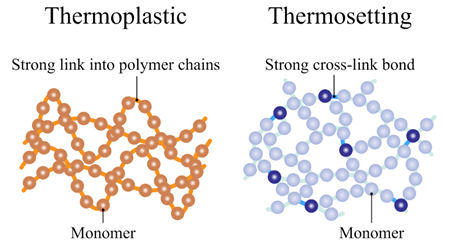
Thermoplastics are a type of polymer that exhibits softening and ductility properties when heated, but return to their solid state upon cooling. Unlike thermosetting plastics, which undergo irreversible chemical changes during the curing process, thermoplastics can be melted and remolded multiple times without significant degradation (Figure 1). The growing demand for sustainable and environmentally friendly materials has led to increased interest in and use of thermoplastics in many industries.
Properties of thermoplastics
Thermoplastics have a wide range of properties that make them useful in a variety of applications. One of the key characteristics of this class of polymers is their high ductility, which allows them to undergo significant deformation without breaking.
This important property makes them easy to process, shape, and fabricate into complex shapes, making them suitable for complex designs and various manufacturing techniques, such as injection molding. In addition, many thermoplastics have a relatively low density, resulting in lightweight products that offer advantages in terms of transportation costs, energy efficiency, and reduced material consumption.
Another important property of thermoplastics is their good chemical resistance. They are resistant to a wide range of chemicals, including acids, bases, solvents and oils. This property makes them suitable for use in harsh environments where exposure to hazardous chemicals is a concern. This is particularly important in industries such as petrochemicals, oil and gas related industries and automotive where components must be highly resistant to aggressive chemical environments.
Thermoplastics also have excellent electrical insulation properties, which makes them useful in the electrical and electronics industries. They are widely used in the manufacture of cables, connectors, insulators, and circuit boards. Their electrical insulation capabilities, combined with flame retardancy, ensure the safety of these materials in various applications.
In addition, thermoplastics exhibit a wide range of melting points, which enables manufacturers to select the appropriate material for the specific processing temperatures they are interested in. This versatility allows for precise control over the manufacturing process, ensuring optimal performance and desired material properties. The availability of thermoplastics with different melting points expands their application in various industries.
Manufacturing of thermoplastics
The process of producing thermoplastics involves several steps. The first step is polymerization, in which monomers are chemically linked together through polymerization reactions to form long-chain polymers. The properties of the resulting thermoplastic depend on the choice of monomers and the reaction conditions during polymerization. After polymerization, thermoplastics may be mixed with other materials, which include polymer additives such as plasticizers, stabilizers, flame retardants, or reinforcing agents. These additives can enhance the properties of the material, such as flexibility, durability, UV resistance, or flame resistance, depending on the intended application.
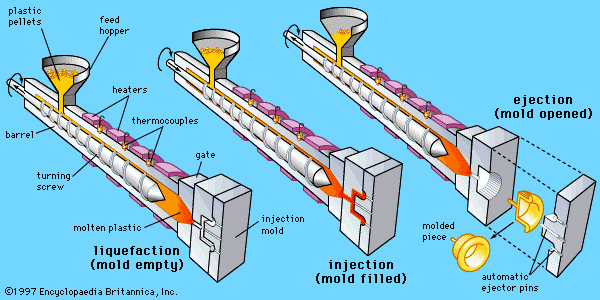
Melt processing is the most common method used to shape thermoplastics. Techniques such as injection molding, extrusion, or blow molding are used to transform molten thermoplastics into the desired shape. Injection molding is widely used for mass production of complex parts with high dimensional accuracy (Figure 2). Extrusion is suitable for the production of profiles, sheets, and continuous films. Blow molding is used to create hollow objects such as bottles and containers. These techniques allow for the efficient and cost-effective production of thermoplastic products of consistent quality.
Once the molten thermoplastic is formed, it undergoes cooling and solidification to become its final solid state. The solidification process locks the polymer chains in place, resulting in a rigid structure with the desired shape and properties. Additional post-processing steps such as modification, machining, or surface treatment may be performed to achieve the desired product specifications.
Applications of thermoplastics
Thermoplastics have found wide applications in various industries due to their unique properties and versatility. Some notable applications include:
Packaging
Thermoplastics such as polyethylene (PE) and polypropylene (PP) are widely used in the packaging industry. These materials have excellent barrier properties, moisture resistance and flexibility, making them suitable for packaging food, beverages, pharmaceuticals and consumer goods. In addition, their low cost, lightweight nature and recyclability contribute to their popularity in this industry, in line with the increasing demand for sustainable packaging solutions (Figure 3).

Car
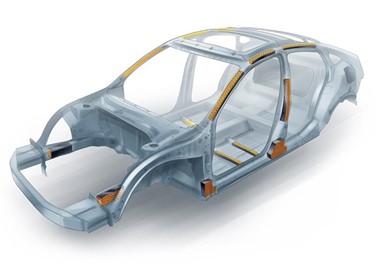
Thermoplastics play a significant role in the automotive industry, reducing weight, improving fuel efficiency, and improving aesthetics. They are used in various components including interior and exterior parts, engine compartments, electrical systems, and under-the-hood applications. Thermoplastics offer advantages such as design flexibility, impact resistance, chemical resistance, and the ability to integrate multiple functions into a single component. The use of thermoplastics in the automotive sector helps produce lightweight vehicles to improve fuel efficiency and reduce greenhouse gas emissions (Figure 4).
Construction
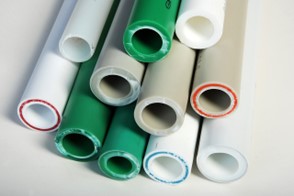
Thermoplastics are essential in the construction industry, particularly in the manufacture of pipes, cables, insulation materials and roofing. They offer advantages such as corrosion resistance, durability, ease of installation and thermal insulation properties. For example, thermoplastic pipes are increasingly replacing traditional metal pipes due to their superior performance, lower weight, longer life and resistance to chemicals and UV rays. In addition, thermoplastics are used in the production of energy-efficient windows, doors and insulation materials that contribute to sustainable building practices (Figure 5).
Consumer goods
Thermoplastics are widely used in the production of various consumer goods such as toys, household appliances and furniture. Their versatility, ease of processing and cost-effectiveness make them attractive for mass production of consumer products. Thermoplastics provide opportunities for creative designs, color variety and customization, enabling manufacturers to meet diverse consumer needs and market demands. In addition, their lightweight nature helps in the transportation and ease of use of consumer goods.
Medicine
Thermoplastics have found widespread use in the medical industry, particularly in medical devices, equipment, and packaging. Materials such as polyvinyl chloride (PVC) and polycarbonate (PC) offer biocompatibility, transparency, sterilizability, chemical resistance, and dimensional stability. These properties are critical to ensuring patient safety, maintaining equipment sterility, and meeting regulatory requirements in medical applications. Thermoplastics are used in items such as syringes, intravenous components, catheters, implants, medical device housings, and packaging for drugs and medical supplies (Figure 6).

Conclusion
Thermoplastics are an essential class of materials with a wide range of properties that make them essential in various industries. Their ability to be melted, reshaped, and recycled multiple times, without significant degradation, makes them highly practical and environmentally friendly.
Thermoplastics offer benefits such as lightweight construction, chemical resistance, electrical insulation, design flexibility, and recyclability. They have revolutionized industries such as packaging, automotive, construction, consumer goods, and medical applications. As technology advances, thermoplastics will continue to evolve, creating new opportunities in manufacturing, design, and sustainability.
Continuous research and development in the field of thermoplastics contributes to a more sustainable and resource-efficient future and addresses the challenges of our modern world.
Compiled by: Mehrnaz Bahadori
Edited by: Zahra Davatgari
Resources
1- Smith, G. P. (2017). Introduction to Thermoplastics. CRC Press.
2- Bhattacharya, M., & Choudhury, A. R. (2016).
3- Thermoplastic Melt Rheology and Processing. CRC Press.
4- Rosato, D. V., Rosato, D. V., & Rosato, M. G. (2004).
5- Injection molding handbook. Springer Science & Business Media. Harper, C. A. (2002).
6- Handbook of plastic processes. Wiley. Sadhir, R. K. (2010).
7- Thermoplastics and Thermoplastic Composites: Technical Information for Plastics Users. Hanser Gardner Publications. MatWeb. (2023).
8- Thermoplastics Database. Retrieved from https://www.matweb.com/
9- National Academies of Sciences, Engineering, and Medicine. (2019).
10- Thermoplastic Elastomers: Building a Future for Polymeric Materials. The National Academies Press. Kumar, S., & Choudhary, A. K. (2018).
11- Additive manufacturing of thermoplastic composites: Processing-structure-property relations. Progress in Materials Science, 93, 1-48.