
Abstract:
β-nucleating agents play an important role in enhancing the properties of polypropylene (PP) by promoting the formation of β-crystals, which exhibit higher toughness and thermal stability compared to the more common α-crystals. This paper reviews the mechanism of β-nucleation, the most commonly used β-nucleating agents, and their effects on the crystallization behavior and mechanical properties of PP. The addition of β-nucleating agents to PP not only improves its physical and mechanical properties, but also expands its industrial applications.
1. Introduction
Polypropylene is one of the most widely used polymers in the world. This semi-crystalline polymer can crystallize in various forms, but mainly in the alpha (α) and beta (β) phases. The α phase is the most stable crystalline form of this polymer, characterized by a monoclinic cell structure, while the less stable β phase has a quasi-hexagonal structure. Depending on the type of formation of these structures, the mechanical properties, thermal stability and processability of the polymer are affected. The α phase usually offers higher strength and stiffness, while the β phase can increase its toughness, flexibility and thermal stability, which are particularly important in applications that require resistance to impact and heat. The greater crystallization of each of these phases depends on the specific conditions that are applied to the polymer compound production process, depending on the product in question.
2. Comparison of α and β nucleation in polypropylene:
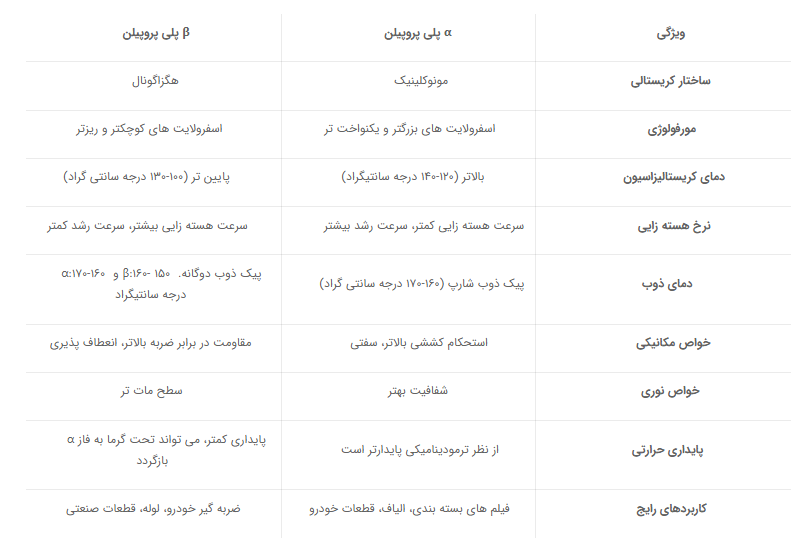
The following table provides a comparative summary of the key characteristics of α and β nucleation in polypropylene:
3. β-phase crystallization
In general, the crystallization of the β phase in polypropylene is influenced by various factors. Temperature conditions (optimal crystallization temperature and cooling rate), pressure, and the presence of specific nucleating agents are some of these. The following briefly discusses the effect of each of these factors:
1.3. Optimum crystallization temperature: The crystallization of the β phase can be effectively achieved between about 100°C and 140°C. In particular, isothermal crystallization at a temperature of about 130°C significantly enhances the formation of β crystals. Cooling rates and temperature gradients also play an important role in determining the phase that crystallizes.
2.3. Cooling rate: Slower cooling rates (below about 50 K/s) are beneficial for the formation of β crystals. Faster cooling rates (between 50 K/s and 300 K/s) tend to reduce beta crystallization and instead lead to an increase in the alpha phase.
3.3. Pressure: Low pressure (about 5 MPa) can facilitate the formation of β crystals, while high pressures (more than 150 MPa) suppress their formation. This suggests that there is a specific pressure range that optimizes β crystallization.
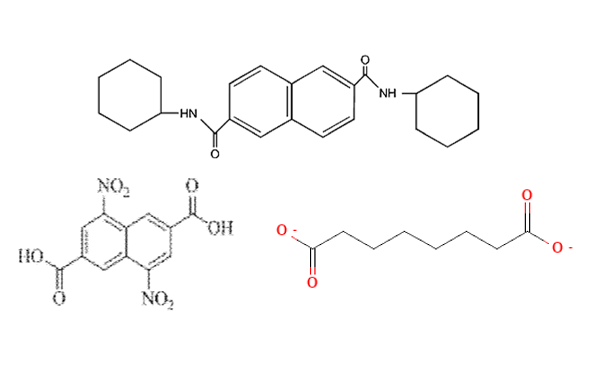
4.3. β-Nucleating Agents: The use of β-nucleating agents has attracted much attention in recent years due to their ability to induce a higher proportion of β-crystals. The most common β-nucleating agents include organic compounds (Figure 1), alkaline earth metal complexes, and hybrid systems that combine several nucleating agents. For example, recent studies have shown that some alkaline earth metal salts can achieve up to 90% β-crystal formation with minimal loading. It should be noted that the performance of nucleating agents can vary based on the process conditions and the specific polypropylene formulation.
4. Application of beta polypropylene
Beta polypropylene is a specialty material with unique properties that make it suitable for specific applications. Its higher thermal resistance, dimensional stability, and chemical resistance compared to alpha make it ideal for automotive parts such as engine parts and under-the-hood components, water delivery systems, electronic enclosures, medical devices, consumer durables, and various industrial components. Beta polypropylene offers excellent performance in harsh environments and is a valuable material in industries that require a product with high thermal and impact resistance.
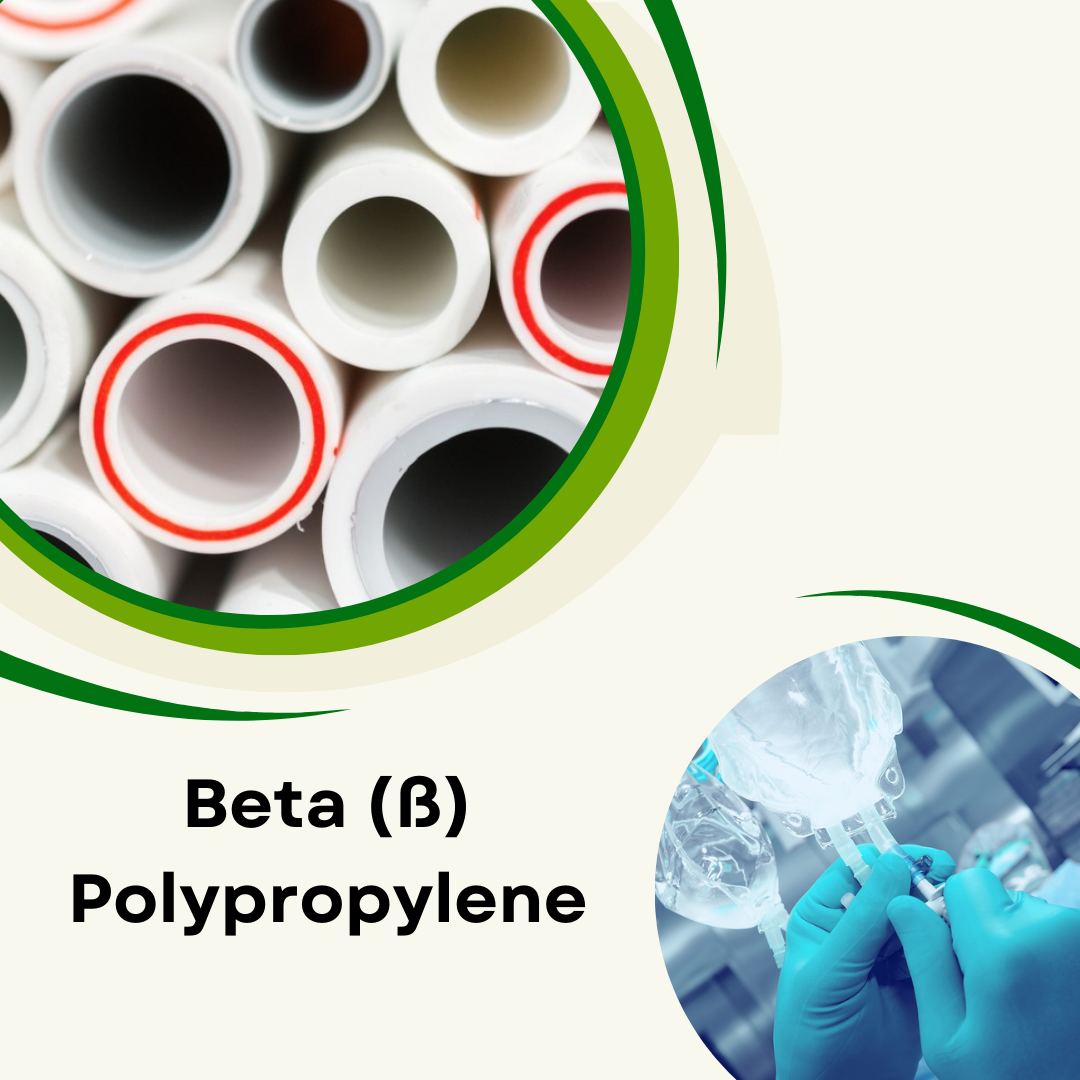
< 0 >Figure 2: Some of the diverse applications of beta-propylene in the automotive, medical, and water transportation industries
As previously mentioned, β-PP is widely used in industrial piping systems for the distribution of water and chemicals. Its high impact strength and resistance to cracking make it suitable for use in hot and cold water distribution systems and some chemicals. It is also used in the construction industry for use in underfloor heating piping, where its durability and resistance to thermal expansion make it an ideal and cost-effective option. In recent years, propylene pipes containing nucleating agents, known and sold as PP-RCT, have been met with considerable acceptance by builders and craftsmen.
Advantages of PP-RCT pipes:
- Higher temperature resistance than conventional PP pipes
- Higher pressure resistance than conventional PP pipes
- High compatibility
- Safe and leak-proof connection methods for them
5. β-PP outlook
The future of β-PP looks promising, especially in high-performance and high-tech applications. Ongoing research into new nucleating agents and processing methods aims to further enhance the properties of β-PP, making it suitable for more applications in industries such as automotive, packaging, and consumer products.
6. Conclusion
The addition of β-nucleating agents is a powerful tool to improve the properties of polypropylene by increasing the β-crystals in the polymer structure. By promoting the formation of the β-phase, some of the mechanical properties of PP, such as toughness and heat resistance, are enhanced. This makes β-polypropylene a preferred choice for various applications.
References:
[1] https://www.mdpi.com/2073-4360/15/14/3107
[2] https://polymer-additives.specialchem.com/selection-guide/nucleating-agents-selection-for-polypropylene
[3] https://www.sciencedirect.com/science/article/abs/pii/S0141391007002261
[4] https://www.ulprospector.com/knowledge/1916/pe-%CE%B2-nucleating-agents-polypropylene/
[5] https://www.mdpi.com/2073-4360/16/12/1710
[6] https://www.researchgate.net/publication/251153001_Nucleating_Agents_in_Polypropylene
[7]https://www.researchgate.net/publication/276169039_Effect_of_nucleating_agent_on_the_crystallization_behavior_crystal_form_and_ solar_reflectance_of_polypropylene
[8] https://pubs.acs.org/doi/10.1021/acsomega.1c00064
Compiled by: Zahra Davat-Gari
Edited by: Dr. Mehrnaz Bahadori, Maedeh Pirgharib Nawaz