
Abstract
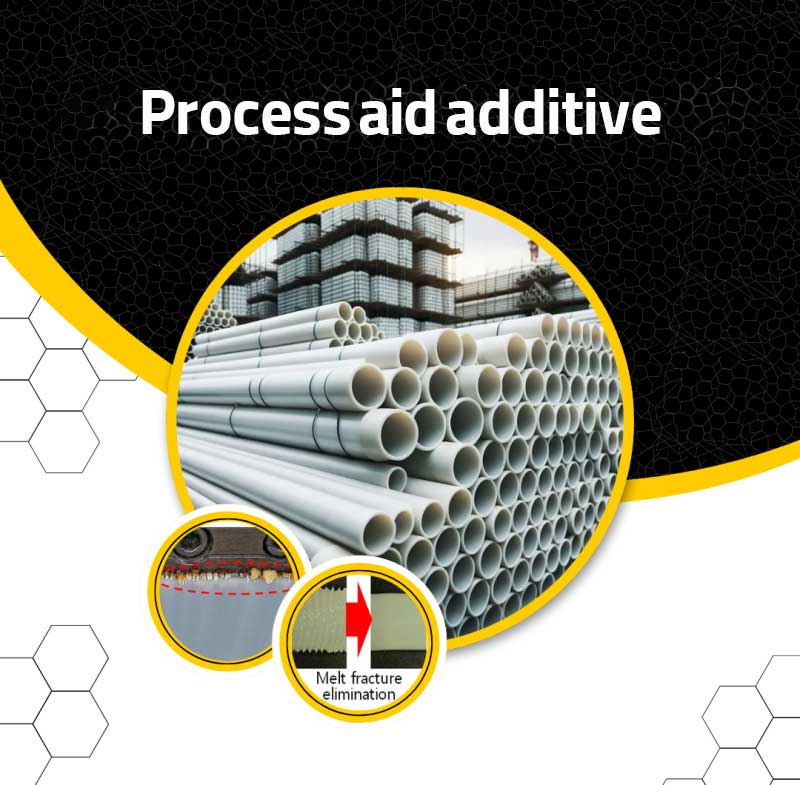
This article examines process aid additives in the plastics industry, their types, and ultimately their performance on the final product.
1. Introduction
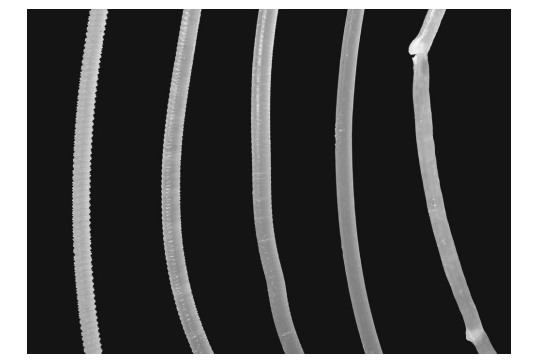
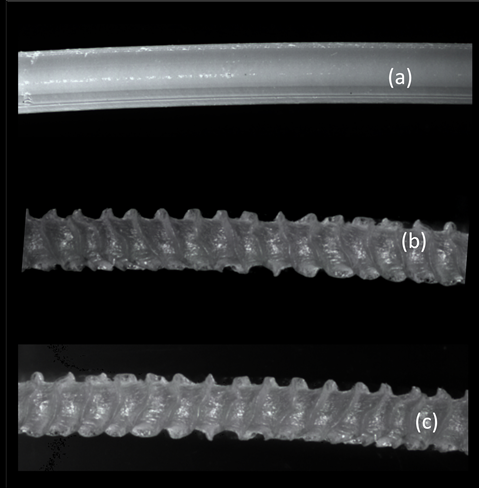
The use of additives and their incorporation into polymer melts is very common in the polymer processing industry. Plastics manufacturers are particularly interested in increasing flow rates, reducing energy costs, and minimizing the occurrence of defects in polymer forming processes such as extrusion. In general, defects in the production of polymer products fall into two groups: (1) surface defects, which usually occur under constant shear stress regardless of the extrusion temperature, and (2) major defects (melt failure) that occur under unsteady flow conditions. Surface defects range from loss of product surface clarity to the formation of “shark skin” (including surface roughness) that may completely impair the usability of the final products. As a result, the production rate in the process operation is usually reduced.
Polymer processing aids (PPAs) play a very important role in the plastics industry, improving the processing properties of polymers and increasing the quality of final products. These materials are usually added to the base polymer in small amounts and have different functions depending on the type of polymer and the processing method used.
2. Types of process aids used in the plastics industry
Process aids are generally based on fluoropolymers, hyperbranched polymers, and boron nitride-based materials.
1.2. Fluoropolymer process aid
Fluorinated processing aids are well known for their ability to eliminate melt fracture defects in polyethylene, including LLDPE and HDPE. These additives help maintain a smooth polymer flow during processing, which is critical to achieving high-quality products. These materials can significantly reduce extrusion pressures, increase polymer production, and prevent mold sag (material pooling at the mold lip).
2.2.Hybrobranched polymers (HBPs)
These materials work by forming a lubricating layer at the interface between the processing equipment and the polymer melt. This dynamic coating reduces shear stress during processing, improves the surface morphology of the output products, and helps eliminate defects such as “shark skin,” a common problem in polymer extrusion processes.
3.2. Boron Nitride (NB) Process Aid
These materials work by forming a lubricating layer between the process equipment and the material being processed. This layer reduces friction and wear, allowing operations to run more smoothly and the finished products to be easily released from dies or extrusion dies. Boron nitride’s unique structure allows it to maintain its properties under high pressure and temperatures, making it a reliable choice for challenging process environments. In short, boron nitride process aids are valuable materials in various industrial applications due to their thermal stability, lubricating properties, chemical resistance, and non-abrasiveness, helping to improve efficiency and product quality in manufacturing processes.
3. Functions of process aid additives
1.3. Improving processability
Process aids improve the flow properties of polymers and reduce friction during processing. This is especially important for polymers with high viscosity or high molecular weight, such as LDPE, LLDPE, HDPE and PVC. They help reduce processing problems such as melt breakage, material build-up in the extruder die and gelling, which can compromise product quality and production efficiency.
2.3. Reducing process defects
Process aids help reduce process defects by facilitating smoother flow through machinery. This leads to increased output rates and reduced production cycle times, which is critical in competitive industries.
2.3. Increasing product quality
Process aids improve the surface quality, transparency, and mechanical properties of final polymer products. For example, acrylic-based additives are commonly used in PVC production to improve the surface quality of the product, resulting in higher quality and longer-lasting products.
References:
[1]Kutz, M. (Ed.). (2011). Applied plastics engineering handbook: processing and materials. William Andrew.
[2] https://patents.google.com/patent/US7341702B2/en
[3]https://www.researchgate.net/publication/238994869_Chain-topology-controlled_hyperbranched_polyethylene_as_effective_polymer_processing_aid_PPA_for_extrusion_of_a_metallocene_linear-low-density_polyethylene_mLLDPE
[4] https://www.sciencedirect.com/science/article/abs/pii/S0032386100001300
[5] https://patents.google.com/patent/US8648134B2/en
Compiled by: Maedeh Pir Gharib Nawaz
Edited by: Dr. Mehrnaz Bahadori