
Abstract
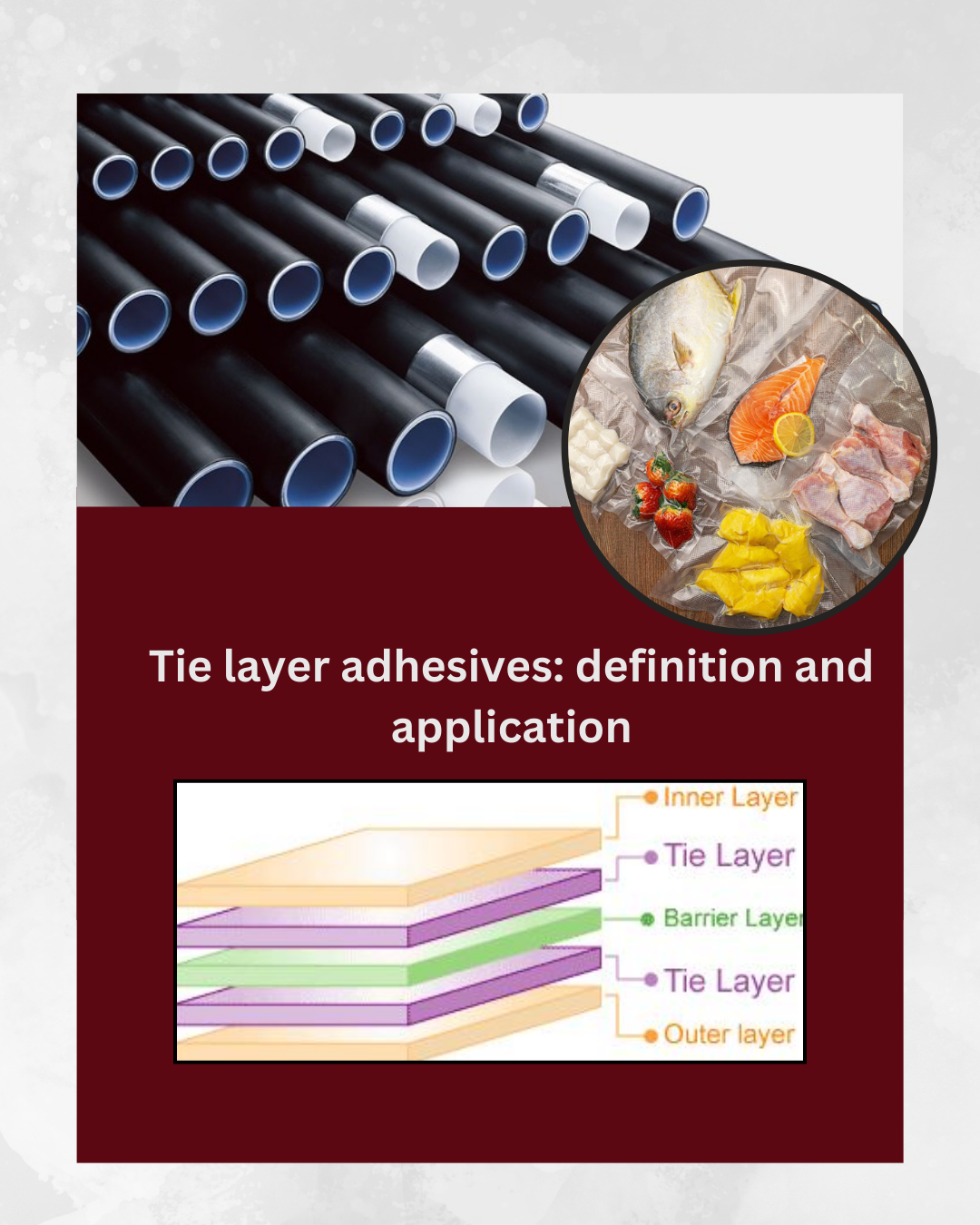
Interlayer adhesives are chemically modified polyolefins that are used as extrudable adhesives in coextrusion or coating operations to bond two materials of dissimilar polarity that have poor adhesion to each other. This process allows the production of multilayer structures with unique properties. This article will review the concept of interlayer adhesives and the applications and benefits of using this adhesive.
Introduction
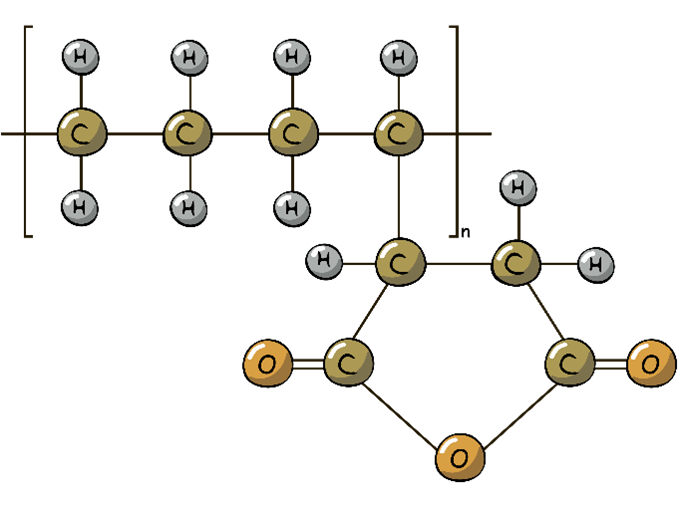
Nowadays, due to the extensive technological advancement in various fields, the use of interlayer adhesives is widely used in various types of industries such as extrusion coating, blow molding, sheet metal industries, thermoforming and other specialized processes. Interlayer adhesives are materials designed to improve adhesion between incompatible layers with different polarities in multilayer structures. These adhesives are usually based on polyolefins modified with acid or anhydride groups, such as maleic anhydride. Maleic anhydride-modified polyolefins (AMP) are the most common interlayer adhesives for the coextrusion process because they are able to react with materials such as nylon, paper, some metals such as aluminum or polar polymers such as ethylene vinyl alcohol copolymer (EVOH) and provide excellent adhesion.
2. Adhesion mechanism in interlayer adhesive
Understanding the different mechanisms of adhesion is important to understand why good interfacial adhesion is achieved with some materials and not with others. Adhesion between two polymeric substrates can occur through a variety of mechanisms. Tie layer adhesives improve adhesion between dissimilar layers through several mechanisms:
1. Creating chemical bonds: These adhesives have functional groups that can react with different surfaces. For example, the anhydride groups in maleic anhydride-modified polyethylene can react with functional groups on polar surfaces.
2. Physical interactions: The polymer chains of the interlayer adhesive can interpenetrate with the polymer chains of adjacent layers, creating intertwined polymer networks.
3. Improved wettability: Interlayer adhesives improve the wettability of inorganic surfaces by polymers, leading to better contact between layers.
4. Increasing the contact surface: These adhesives increase the effective contact surface between layers by filling surface pores.
5. Creating a compatible middle layer: The interlayer adhesive acts as a middle layer that is compatible with both heterogeneous layers and allows them to bond better.
6. Formation of covalent bonds: In some cases, interlayer adhesives can form strong covalent bonds with adjacent layers, resulting in very strong adhesion.
Together, these mechanisms enable interlayer adhesives to provide effective adhesion between heterogeneous layers with different polarities and produce multilayer structures with improved properties.
3. Advantages of using interlayer adhesive:
The use of interlayer adhesives in multilayer structures offers many advantages, including:
1. Improving the performance of final products by combining the desired properties of different materials
2. Increasing the durability and lifespan of multilayer products
3. Possibility of producing lighter and more durable products
4. Reducing production costs by allowing the use of cheaper materials in combination with more expensive materials
5. Expanding design and innovation capabilities in the production of new products
4. Use of interlayer adhesives
The applications of interlayer adhesives are widespread in various industries due to their ability to bond dissimilar materials in multilayer structures. The main applications of these adhesives include:
1. Packaging:
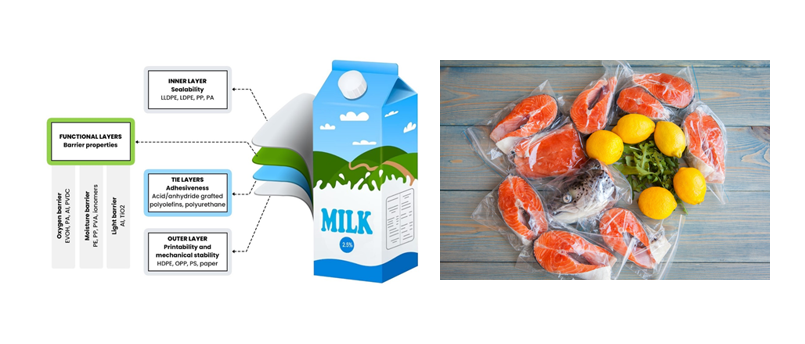
Interlayer adhesives are used in multilayer packaging films, flexible packaging such as bags, tubes, wrappers, rigid packaging such as bottles and containers, food packaging with a barrier layer against oxygen and moisture penetration, and tubes for products such as toothpaste, ointments, and cosmetics.
2. Multilayer pipes:
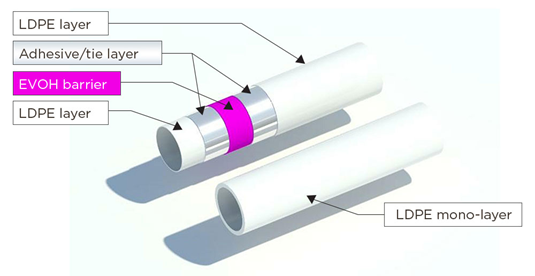
Another application of interlayer adhesives is their use in multilayer pipes for oil and gas, multilayer pipes in heating and cooling systems, pipe coatings, and industrial transport tanks (IBC).
3. Automotive industry:
Other applications of interlayer adhesives include their use in fuel tanks and multilayer parts.
4. Agricultural industry:
Interlayer adhesives are used in the manufacture and production of multilayer extruded agricultural films.
5. Medical and pharmaceutical:
Another application of interlayer adhesives is their use in the packaging of medical and pharmaceutical products.
5. Conclusion
Interlayer adhesives play a vital role in modern industries and the production of advanced products. These specialized materials enable the bonding of materials with different polarities, thus enabling the production of multilayer products with superior properties. Given the growing demand for more complex and higher-performance products in various industries, the importance and application of interlayer adhesives will increase in the future. Continuous advances in the formulation and production of these adhesives will provide new possibilities for improving their performance and expanding their applications. As a result, interlayer adhesives will maintain their position as a key component in industrial innovation and the production of advanced products.
Resources
1. Paul, M., Morris, B., Weinhold, J., & Hausmann, K. (2022). The effect of stretching and tie layer composition on adhesion strength of multi-layered films. Journal of Plastic Film & Sheeting, 38(3), 351-368
2.Botros, M. G., Mavridis, H., & Mirabella, F. M. (2005). New developments in Plexar tie-layer adhesives. In TAPPI Conference, May
3.Li, C., Zhang, Y., & Zhang, Y. (2003). Melt grafting of maleic anhydride onto low-density polyethylene/polypropylene blends. Polymer testing, 22(2), 191-195.
Content compiler: Maedeh Pirgharib Nawaz
Scientific Editor: Dr. Mehrnaz Bahadori