
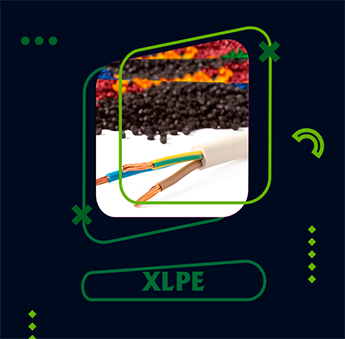
In fact, XLPE stands for cross-linked polyethylene. Some of the properties of polyethylene, such as high chemical resistance and moisture resistance, are important features of this material. Its high thermal insulation quality makes it suitable for use in high voltage and high temperature conditions.
Common applications of cross-linked polyethylene (XLPE) would be in building piping (or plumbing) systems, as insulation for high-voltage cables, and as a replacement for polyvinyl chloride (PVC) and copper pipes in water pipes.
What is cable compound?
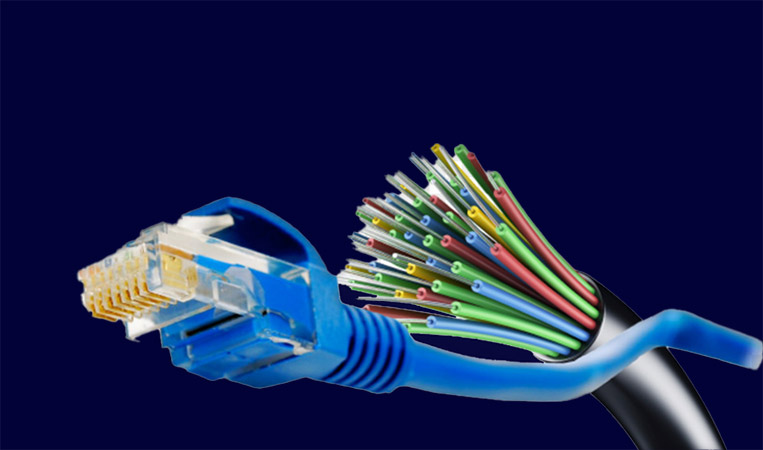
This type of compound is used to protect telecommunication, electrical, and electronic cables. In various types of wires, whether it is a regular cable or fiber optic, this type of compound is used for external protection as well as elasticity.
Cable compound is a petroleum-based material used to prevent water penetration and provide proper insulation in the production of electrical wires and cables. This type of compound is used in the production of various cables such as power and telephone lines. Moisture is one of the important issues that can damage cables. Because in humid areas and the presence of salt in the air, it can penetrate from the outer insulation to the inner.
XLPE is made by compounding, plasticizing and granulating low-density polyethylene as the base resin mixed with cross-linking agent and other additives. XLPE insulation is used at both high and low temperatures. Due to its unique structure, XLPE is not only highly resistant to abrasion, but also resistant to high-voltage electricity, chemicals and other harmful substances. XLPE is used for insulation of medium and high voltage AC cables.
So it is very important to design and engineer cable products with high electrical resistance. If the outer insulation starts to deteriorate, it will damage the conductors and other lines. So using the right and high-quality compounds can prevent this problem.
XLPE, the brand name for cross-linked polyethylene, has high insulating properties. Because polyethylene, when cured, forms multiple bonds that create high insulating properties.
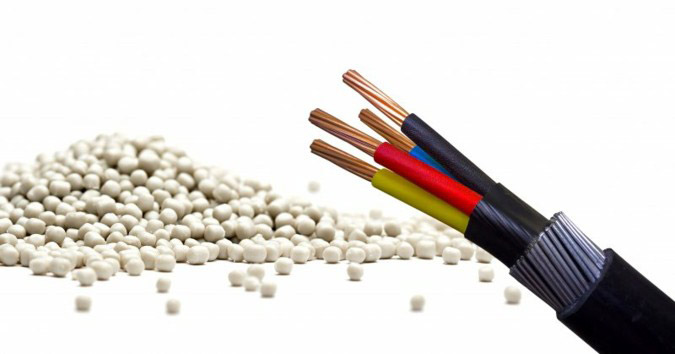
What are the special properties of cross-linked polyethylene (XLPE)?
Compared to regular polyethylene, cross-linked polyethylene (XLPE) has improved properties that improve its performance.
XLPE wire with its improved properties does not melt easily and can withstand higher temperatures up to 120°C for a long time without losing its mechanical and chemical properties. The material has increased resistance to abrasion and environmental stresses.
Due to its high strength, XLPE insulated wire can be used in harsh conditions. XLPE insulation has a longer life compared to PVC insulation which is only suitable for low tensile applications.
The features that distinguish XLPE cables include:
- High flexibility
- Excellent electrical, thermal and physical properties; excellent resistance to moisture and flame; excellent resistance to crushing and thermal deformation
- Being lightweight
- High durability and resistance
- Continuous flow carrying capacity
- More short circuit
- High temperature tolerance
What are the uses of XLPE (cross-linked polyethylene)?
The list of uses for XLPE is endless and it can be said that it is used in every industry due to its beneficial properties. For example, in mining, its ability to withstand very high pressures and temperatures while still maintaining its toughness is what makes it a suitable material.
What are the advantages of XLPE insulated cables?
In addition to improved chemical properties that offer amazing resistance to moisture, chemicals, and oils, XLPE insulated cables also offer mechanical properties including impact resistance, elongation, and of course high tensile strength.
Using XLPE insulated cables saves a lot of time and money during installation, repair, and maintenance of piping systems and networks.
Power cables sometimes continuously transmit high-voltage electricity from one point to another, causing sparks, shocks, and heat, which can cause fires or other potential hazards, and an effective solution must be chosen for that.
Likewise, these wires and cables sometimes run underground or above ground, where they are exposed to various elements and conditions.
These types of concerns make insulation essential. XLPE wires and cables are designed to withstand any of these scenarios without losing their mechanical properties and performance integrity.
XLPE are good insulators for wires!
XLPE insulation or tubing is an excellent insulator for power cables and is quickly replacing other conventional options. XLPE cable insulation provides adequate protection for bare copper wires to safely transmit electricity without compromising weather, moisture, and heat resistance.
Why do XLPE power cables require less maintenance?
Bare copper wires perform very well when insulated with cross-linked polyethylene – and efficiency increases too! Improved performance in XLPE power cables is rapidly increasing and XLPE power cable is gaining popularity in many industries.
Their improved resistance to water also makes XLPE power cables ideal for use in electrical work or projects. XLPE power cables do not melt when exposed to high temperatures, and their improved mechanical properties allow them to carry a greater load per unit area without breaking or tearing.
Conclusion
Beyond XLPE’s extensive applications in electrical insulation, XLPE is also used in radiant heating in homes. Its flexible nature and ability to withstand heat while still maintaining its mechanical properties allow XLPE pipe to easily transfer radiant heat wherever it is needed. For more information about Behin Polymer products, contact our experts.