
Abstract
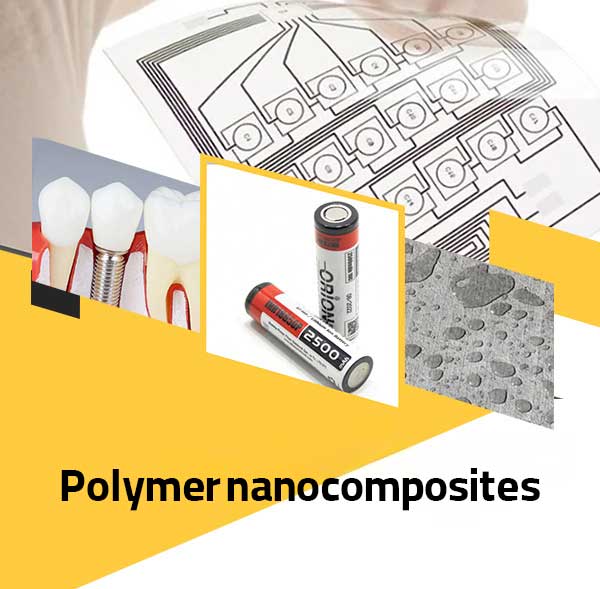
Polymer nanocomposites are a class of advanced materials in which polymer textures are combined with nanoscale fillers, which will lead to increased mechanical, thermal, permeability, etc. properties. The growing interest in these materials stems from their potential to revolutionize various industrial sectors, including packaging, automotive, aerospace, electronics, biomedical applications, piping, and others.
Keywords: Polymer nanocomposites, synthesis of polymer nanocomposites, application of polymer nanocomposites.
Introduction
Polymers are usually reinforced by fillers of different sizes to reduce some of their limitations and weaknesses and thus expand their applications. The use of nanoscale fillers to improve the mechanical and physical properties of polymers has led to the production of a variety of polymer composites. Nanoscale fillers are nanoscale in at least one of their dimensions and also have a variety of morphologies. Nanoscience and nanotechnology provide unique opportunities to create new combinations of nanoscale fillers and polymer materials to obtain polymer nanocomposites with interesting properties.
The uniform dispersion of these fillers of different shapes and sizes, at the nanoscale size, can create an extremely large surface area per unit volume between the nanoscale fillers and the host polymers. Polymer nanocomposites have superior mechanical and physical properties compared to the host polymers due to the high surface area of the filler materials.
Classification of polymer nanocomposites
The classification of polymer nanocomposites is based on the type of nanofillers used and the type of polymer texture used. These classifications help in understanding the different types of nanocomposites, their properties and specific applications. Here is a brief explanation of this classification:
1. Classification based on nanofillers
A) Clay nanocomposites
Clay nanoparticles, such as montmorillonite and organically modified clays, are commonly used as nanofillers in polymer matrices. These nanoparticles have high aspect ratios and surface areas, which lead to significant improvements in mechanical properties, thermal stability, gas permeability properties, and flame resistance. Interlayer penetration and exfoliation of clay layers in the polymer matrix are crucial to achieving improved properties (Figure 1).

B) Carbon-based nanocomposites
Carbon nanotubes (CNTs) and graphene are popular carbon-based nanofillers used in polymer textures. CNTs have exceptional mechanical properties such as high tensile strength and modulus, making them suitable for reinforcing polymers. Graphene is a single layer of carbon atoms arranged in a two-dimensional lattice. The material exhibits remarkable thermal and electrical conductivity, making it ideal for applications requiring heat dissipation and good electrical performance.
c) Metal nanocomposites
Metal nanoparticles such as silver, gold, and platinum are incorporated into polymer matrices to impart unique properties. Metal nanocomposites are used in applications that require antimicrobial properties, increased electrical conductivity, and catalytic activity.
D) Metal oxide nanocomposites
Metal oxide nanoparticles such as titanium dioxide (TiO2) and zinc oxide (ZnO) are widely used as nanofillers. These nanocomposites are used in UV protection, self-cleaning coatings, and improved mechanical properties in various industries.
e) Organic nanocomposites
Organic nanoparticles, including clays modified by organic chemical compounds, polymer nanoparticles, and dendrimers, are used to modify the properties of polymeric tissues. These nanocomposites exhibit unique properties such as improved flame retardancy, gas permeability properties, and controlled drug release in biomedical applications.
f) Metal-Organic Framework (MOF) nanocomposites
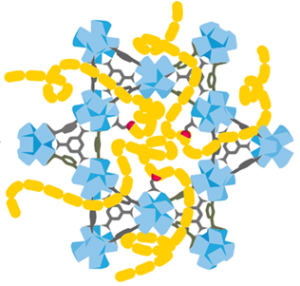
MOF/polymer nanocomposites are innovative materials composed of metal-organic frameworks (MOFs) and polymers. MOFs are porous structures composed of metal ions linked by organic ligands; when incorporated with polymers, these materials offer unique properties and applications. In nanocomposites, MOFs act as fillers, enhancing mechanical, thermal, and gas adsorption properties; they also provide a flexible and stable polymer matrix that provides good processability. This combination results in tunable material properties, high surface area, and selective adsorption. MOF/polymer nanocomposites have applications in gas storage, separation, catalysis, sensors, and drug delivery systems. Their versatile nature and potential for use in various applications make them promising options for various and advanced technologies (Figure 2).

2. Classification based on polymer texture
A) Thermoplastic nanocomposites
Thermoplastic polymers such as polyethylene (PE), polypropylene (PP), polyvinyl chloride (PVC) and polystyrene (PS) are commonly used as substrates in nanocomposites. Thermoplastic nanocomposites exhibit ease of processing, recyclability and good mechanical properties. These materials are used in automotive parts, packaging materials, etc.
B) Thermoset nanocomposites
Thermosetting polymers, including epoxy, phenolic, and polyester resins, act as the matrix in nanocomposites. These polymers undergo irreversible processability during processing, resulting in resistance to higher temperatures and improved dimensional stability. Thermosetting nanocomposites are widely used in aerospace components, electrical insulation, and high-temperature applications.
Synthesis of polymer nanocomposites
The synthesis of polymer nanocomposites involves incorporating nanoscale fillers (nanoparticles or nanofibers) into a polymer matrix to enhance the properties of these materials. The goal of this process is to achieve uniform dispersion of the nanofillers in the polymer matrix and strong surface bonding between them and the host polymer. Various methods can be used to synthesize polymer nanocomposites, each presenting specific advantages and challenges. Some common synthesis methods include:
1. In-situ polymerization
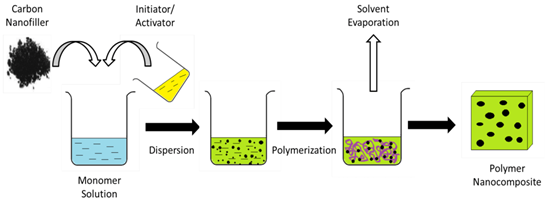
In in situ polymerization, the polymer is synthesized in the presence of nanofillers. This process involves the polymerization of monomers around dispersed nanofillers, resulting in a uniform distribution of the nanofillers in the polymer matrix. This method provides strong surface bonding between the nanofillers and the polymer, which in turn improves mechanical and thermal properties. In situ polymerization is particularly suitable for nanofillers that are chemically compatible with the polymer matrix (Figure 3).

2. Mixing the solution
In this method, the nanofillers are dispersed in a solvent and the polymer is dissolved in the same solvent. The nanofillers and the polymer solution are then mixed together to achieve a homogeneous dispersion of the nanofillers in the polymer matrix. After the solvent evaporates, the polymer nanocomposite is formed. This method allows for better control over the dispersion of the nanofillers, but the interfacial bond between the nanofillers and the polymer may not be as strong as in situ polymerization.
3. Molten mixture
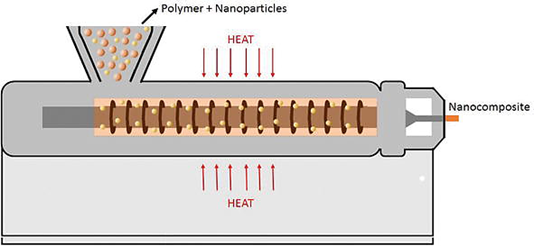
Melt blending is performed in the molten state of the polymer. The nanofillers and the polymer are mixed together at high temperatures using extruders or mixers. The process involves shear forces and mixing to achieve a uniform dispersion of the nanofillers in the molten polymer. Melt blending is commonly used for thermoplastic nanocomposites and allows for large-scale production. However, achieving uniform dispersion and strong surface bonding can be challenging, especially for nanofillers with high aspect ratios (Figure 4).

4. Pattern-based methods
Template-assisted methods involve the use of templates to guide the arrangement of nanofillers during synthesis. Templates with specific structures can be used to guide the self-assembly of nanofillers. This method leads to highly ordered nanocomposite structures, precise control of nanofiller arrangement, and enhanced properties. The templates can be removed after synthesis, leaving a well-organized nanocomposite.
The choice of synthesis method depends on several factors, including the type of nanofiller, the desired properties of the nanocomposite, and the compatibility between the nanofiller and the polymer matrix. Each method has its own advantages and challenges, and researchers often tailor the synthesis approach based on the specific requirements of their intended applications.
Regardless of the synthesis method, achieving uniform dispersion of nanofillers and strong surface bonding between nanofillers and polymer matrix is crucial to maximize the benefits of polymer nanocomposites. Careful selection of processing parameters and use of compatibilizers can enhance the properties of nanocomposites and ensure their successful synthesis.
Applications of polymer nanocomposites
Polymer nanocomposites have found numerous applications in various industries due to their unique properties and better performance compared to conventional polymers. Some of the key applications of polymer nanocomposites include:
1. Electronics
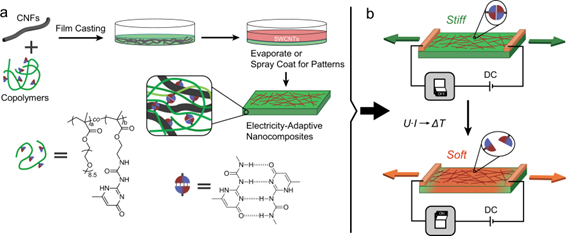
Polymer nanocomposites are used in the electronics industry due to their electrical properties and thermal capabilities. Nanocomposite materials with high electrical conductivity are used as conductors, sensors, and flexible electromagnetic shielding components. They also act as efficient thermal interface materials to dissipate heat from electronic devices, improving the stability and lifespan of these devices (Figure 5).

2. Car
The automotive industry uses polymer nanocomposites in various components. These materials reduce weight, which leads to improved fuel efficiency and reduced emissions. Nanocomposites are used in bumpers, body panels, engine components, and interior parts, providing strength, impact resistance, and corrosion protection. In addition, nanocomposites can reduce noise and vibration entering the vehicle, which will increase the vehicle’s overall performance.
3. Biomedicine
Biodegradable polymer nanocomposites have attracted much attention in the biomedical field (Figure 6). These materials are used in tissue engineering to create scaffolds for the regeneration and repair of damaged tissue. Nanocomposites with controlled release properties are also used for drug delivery systems; these materials allow for precise drug dose release and targeted therapy, and are also used in medical devices such as surgical implants due to their biocompatibility and enhanced mechanical properties.

4. Packaging
Polymer nanocomposites have revolutionized food and beverage packaging. By incorporating nanofillers into polymer films, packaging materials gain superior barrier properties that extend the shelf life of perishable goods and protect the material from moisture, gases, and contaminants. Packaging materials containing nanocomposites help reduce food waste, preserve freshness, and maintain nutritional value.
5. Construction
In the construction industry, polymer nanocomposites are used for infrastructure materials such as concrete, coatings, and sealants. These materials improve mechanical strength and increase durability and resistance to atmospheric agents, which makes these materials particularly popular with structural engineers for high-performance applications in buildings and civil engineering projects.
6. Energy storage
Polymer nanocomposites are used in energy storage devices such as lithium-ion batteries and supercapacitors. The incorporation of nanofillers increases the electrical conductivity and thermal stability, mechanical strength of battery electrodes and separators, leading to improved energy efficiency and longer cycle life (Figure 7).

7. Environmental applications
Polymer nanocomposites play a significant role in environmental protection and remediation. Nanocomposite materials are used in water purification processes to remove pollutants. They are also widely used in wastewater treatment, air filtration, and oil spill cleanup due to their efficient adsorption and filtration capabilities.
8. Use of nanocomposites in the pipe industry
The use of nanocomposites in the pipe industry is a new area of research that has the potential to make significant improvements in various aspects of pipe construction, performance, and durability. The following are some of the improved properties of construction pipes when combined with various nanocomposites:
• Enhanced mechanical properties: Incorporating nanoparticles such as carbon nanotubes (CNTs) or nanofibers into a polymer matrix can significantly enhance the mechanical properties of pipes. These improvements include increased tensile strength, impact resistance, and stiffness, which makes the pipes more durable and able to withstand higher pressures and stresses.
• Improved permeability properties: Nanocomposites can provide better barrier properties against gas and liquid permeation. This is especially important in industries such as oil and gas, where pipes are used to transport fluids and gases. Adding nanoparticles to polymer composites can reduce permeation rates, prevent leakage, and increase the safety of the final product.
• Corrosion resistance: Nanocomposites can provide better resistance to corrosion and degradation, which is essential for pipes used in corrosive environments or transporting corrosive materials. Nanoparticles can act as a barrier, preventing the penetration of corrosive agents and increasing the life of the pipes.
• Thermal stability and conductivity: Nanocomposites can enhance thermal stability and heat transfer properties. This is significant in industries where pipes are exposed to extreme temperatures or in processes where heat exchange is important. Nanoparticles can reduce heat loss and improve overall thermal efficiency.
• Weight reduction and increased flexibility: Incorporating nanomaterials can lead to lighter and more flexible pipes that can be useful for transportation and installation. Weight reduction can also help save costs during the transportation and installation processes.
• Anti-fouling and self-cleaning properties: Nanocomposites can be designed with surface modifications that prevent the accumulation of fouling agents such as biofilms or mineral deposits on the inner surface of pipes. This can help maintain fluid flow efficiency and reduce the need for frequent maintenance.
• Sensors and monitoring: Nanocomposites can be engineered to have sensing capabilities, allowing for precise monitoring of parameters such as strain, pressure, temperature, and even the presence of certain chemicals. This can help detect potential problems early and increase the overall reliability of piping systems.
The applications of polymer nanocomposites are constantly expanding as researchers are constantly discovering new nanofillers and developing new synthesis methods to make them, which allow for the tuning of the properties of these materials. Creating these improved properties makes them suitable for various industries and paves the way for innovative solutions and sustainable developments.
Recent developments and challenges
Recent research has focused on developing novel nanofillers, improving processing techniques, and exploring green and sustainable approaches for the synthesis of polymer nanocomposites. However, challenges such as achieving uniform dispersion of nanoparticles, maintaining their functionality during processing, and concerns about potential toxicity necessitate further research to ensure safe industrial applications and high-volume production capability.
Conclusion
Polymer nanocomposites are an advanced field of materials science with tremendous potential for applications in various industries. By effectively combining nanoscale fillers with polymer textures, these advanced materials improve mechanical, thermal, permeability, and other properties, opening new avenues for innovation in various fields. Further research and development in this field is likely to lead to more diverse and impactful applications, driving progress in various sectors and fostering a more sustainable and technologically advanced future in various industries.
Compiled by: Dr. Mehrnaz Bahadori
Scientific Editor: Zahra Davatgari
Resources
1. Fu, S.; Sun, Z.; Huang, P.; Li, Y.; Hu, N., Some basic aspects of polymer nanocomposites: A critical review. Nano Materials Science 2019, 1 (1), 2-30.
2. Bassyouni, M.; Abdel-Aziz, M.; Zoromba, M. S.; Abdel-Hamid, S.; Drioli, E., A review of polymeric nanocomposite membranes for water purification. Journal of Industrial and Engineering Chemistry 2019, 73, 19-46.
3.Joshi, M.; Chatterjee, U., Polymer nanocomposite: An advanced material for aerospace applications. In Advanced composite materials for aerospace engineering, Elsevier: 2016; pp 241-264.
4. Bratovčić, A.; Odobašić, A.; Ćatić, S.; Šestan, I., Application of polymer nanocomposite materials in food packaging. Croatian journal of food science and technology 2015, 7 (2), 86-94.
5. Shameem, M. M.; Sasikanth, S.; Annamalai, R.; Raman, R. G., A brief review on polymer nanocomposites and its applications. Materials Today: Proceedings 2021, 45, 2536-2539.