
Abstract
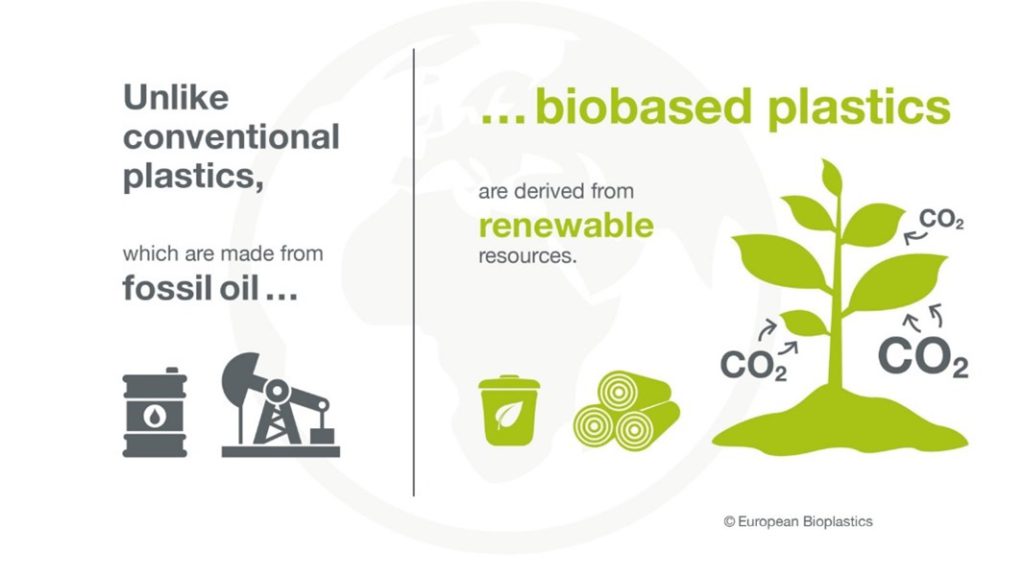
Green polymers are a class of sustainable and environmentally friendly materials that have attracted increasing attention as alternatives to traditional petroleum-based plastics. These polymers are derived from natural and renewable sources such as plant materials, agricultural waste, or biodegradable raw materials.
1. Introduction
The use of conventional plastics and polymers is unavoidable in modern society, with applications ranging from packaging and consumer goods to automobiles and electronics. However, the heavy dependence of these materials on finite fossil fuel resources and their significant environmental impact have led to a growing demand for more sustainable alternatives. Green polymers, also known as biopolymers or biodegradable polymers, offer a promising solution by using natural and renewable raw materials to create polymeric materials with a reduced carbon footprint (Figure 1) and improved end-of-life management.
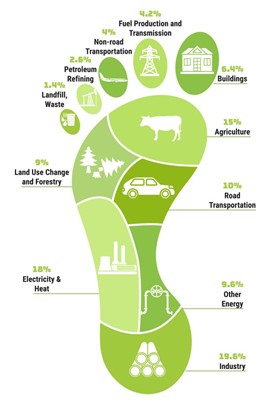 Figure 1: Carbon footprint
These environmentally friendly polymers are derived from a variety of renewable resources, including plant starch, cellulose, lignin, vegetable oils, and microbial fermentation. They can be designed to exhibit similar performance properties to petroleum-based plastics, while also offering benefits such as biodegradability, compostability, and closed-loop recycling potential (Figure 1). The development of green polymers is growing with increasing environmental regulations, consumer awareness, and the need to transition to a circular economy, where waste is minimized and resources are reused.
2. Biodegradable and biocompostable
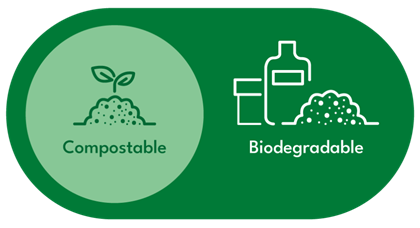
The terms biodegradable and biocompostable refer to different processes and outcomes related to the decomposition of materials, particularly in environmental contexts (Figure 3).
Biodegradable: A biodegradable material is capable of being broken down into simpler, non-toxic materials through the action of microorganisms such as bacteria and fungi. This process can occur under a variety of environmental conditions, both with oxygen (aerobic) and without oxygen (anaerobic). The time frame for biodegradation can vary widely, from days to years, depending on the material and environmental conditions. There are classifications such as “readily biodegradable,” which usually refers to materials that decompose within 28 days. The end products of biodegradation are generally carbon dioxide, water, and biomass, which can be reincorporated into the ecosystem without causing long-term damage (Figure 4).

Biocompostable: Biocompostable materials are a subset of biodegradable materials that not only break down into non-toxic components, but do so specifically in the composting environment. This process is usually managed by humans and occurs under controlled conditions that optimize decomposition. Compostable materials are expected to decompose more quickly than general biodegradable materials, often within a few months, due to the ideal conditions provided in composting systems (such as optimal temperature, humidity, and aeration). The final products of composting include humus—a nutrient-rich organic matter that enhances soil health—along with carbon dioxide and water. Compost also produces beneficial microorganisms that improve soil quality (Figure 5).
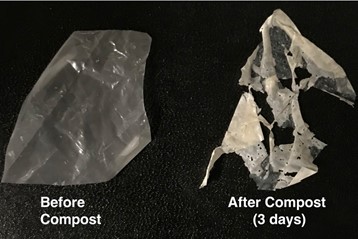 Figure 5. Biocompostable plastic
The differences between biodegradable and biocompostable are presented in the table below:
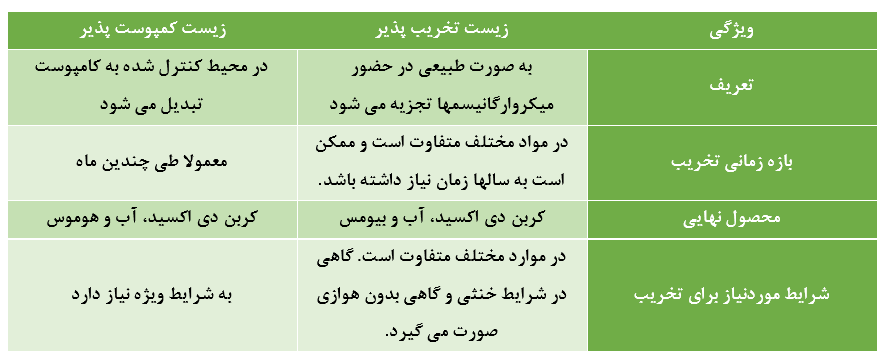
In principle, while all biocompostable materials are biodegradable, not all biodegradable materials are necessarily suitable for composting environments.
3. Methods for producing green polymers
Green polymers can be produced by various means, including chemical synthesis, enzymatic catalysis, and microbial fermentation. Some of the most common production methods include:
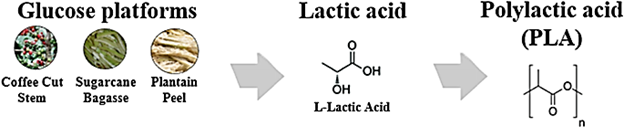
1. Polylactic acid (PLA): PLA is a biodegradable and compostable polymer obtained from renewable resources such as corn, sugarcane or cassava. It is usually produced through the polymerization of lactic acid, which is obtained through the fermentation of carbohydrates (Figure 6). PLA can be designed to have a wide range of physical and mechanical properties, making it a versatile material for various applications.
2. Polyhydroxyalkanoates (PHAs): PHAs are a family of biodegradable polyesters produced by certain microorganisms as carbon and energy storage compounds. They can be synthesized through bacterial fermentation of sugars or lipids using microbes such as Cupriavidus necator or Pseudomonas species. PHAs have properties similar to conventional plastics, but with the added advantage of being fully biodegradable (Figure 7).

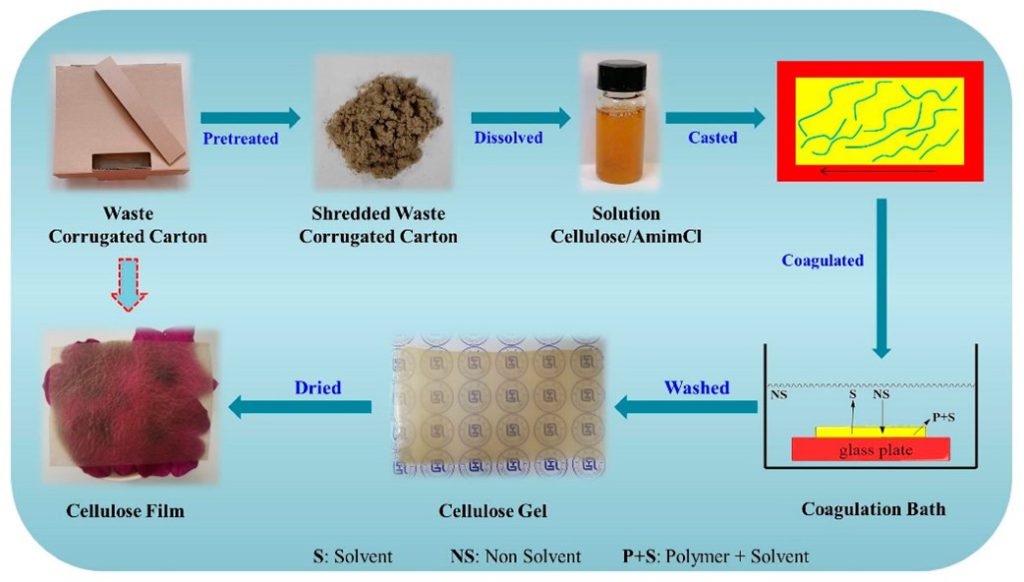
3. Cellulose-based polymers: Cellulose, the most abundant natural polymer on Earth, can be used to produce a variety of green polymers, including cellulose acetate, cellulose nitrate, and cellulose ethers. These materials can be obtained from sources such as wood pulp, agricultural residues, or recycled paper. Cellulose-based polymers have excellent mechanical properties and biodegradability. There is also the potential for chemical modifications to tune their properties.
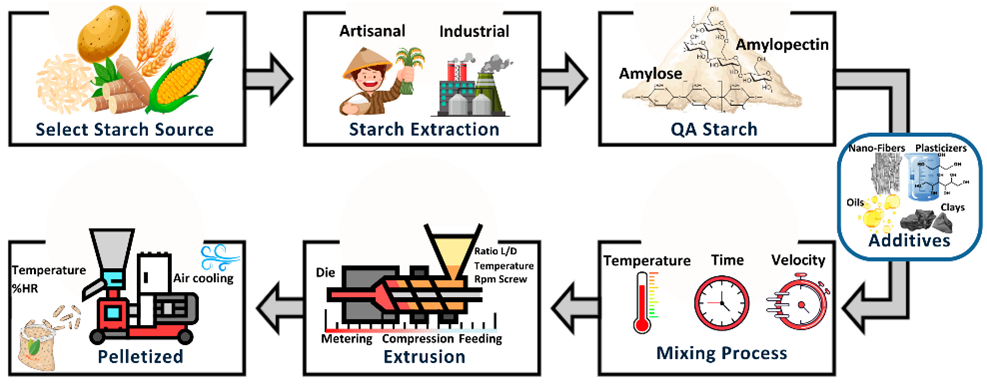
4. Starch-based polymers: Starch, derived from sources such as corn, wheat, or potatoes, can be chemically or enzymatically modified to create biodegradable polymers with a wide range of applications. Starch-based materials are often combined with other biopolymers or synthetic additives to improve their mechanical and thermal properties, as well as their processability (Figure 9).
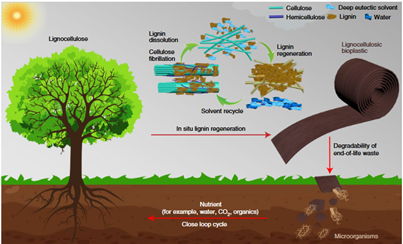
5. Lignin-based polymers: Lignin, a complex aromatic polymer found in the cell walls of plants, can be used as a renewable raw material for the production of various green polymers. Lignin can be extracted from biomass sources such as wood, agricultural waste, or byproducts of the pulp and paper industry and then processed chemically or enzymatically to create polymeric materials (Figure 10). Lignin-based polymers exhibit unique properties including thermal stability, antioxidant activity, and the potential for carbon fiber production.
Conclusion:
Green polymers are a promising solution to the environmental challenges posed by conventional petroleum-based plastics. By utilizing renewable and biodegradable raw materials, these materials offer a more sustainable path with the potential to reduce waste, greenhouse gas emissions, and dependence on finite fossil fuel resources. As research and development in this area continues to advance, the adoption of green polymers is expected to accelerate, leading to a more environmentally conscious future for the polymer industry.
However, the widespread adoption of green polymers still faces challenges such as the need to further optimize production processes, compete cost-effectively with traditional plastics, and develop effective recycling and disposal infrastructure. Ongoing research efforts are focused on addressing these challenges, exploring new feedstock sources, improving the performance of green polymers, and developing innovative processes and end-of-life management strategies.
References
Babu, R. P., O’Connor, K., & Seeram, R. (2013). Current progress on bio-based polymers and their future trends. Progress in Biomaterials, 2(1), 8.
Gandini, A. (2008). Polymers from renewable resources: a challenge for the future of macromolecular materials. Macromolecules, 41(24), 9491-9504.
Jem, K. J., & Tan, B. (2020). The development and challenges of poly (lactic acid) and poly (glycolic acid). Advanced Industrial and Engineering Polymer Research, 3(2), 60-70.
Narancic, T., Cerrone, F., Beagan, N., & O’Connor, K. E. (2020). Recent advances in bioplastics: application and biodegradation. Biochemical Society Transactions, 48(4), 1279-1288.
Storz, H., & Vorlop, K. D. (2013). Bio-based plastics: status, challenges and trends. Landbauforschung, 63(4), 321-332.
Gupta, A. P., & Kumar, V. (2007). New emerging trends in synthetic biodegradable polymers–Polylactide: A critique. European Polymer Journal, 43(10), 4053-4074.
Kalia, S., Dufresne, A., Cherian, B. M., Kaith, B. S., Avérous, L., Njuguna, J., & Nassiopoulos, E. (2011). Cellulose-based bio-and nanocomposites: a review. International journal of polymer science, 2011.
Satyanarayana, K. G., Arizaga, G. G., & Wypych, F. (2009). Biodegradable composites based on lignocellulosic fibers—An overview. Progress in Polymer Science, 34(9), 982-1021.
Content compiler: Dr. Mehrnaz Bahadori